
What Is the Bunny Hop Exercise?
Reviewed and updated: 14 October 2026
The Bunny Hop is an Animal Moves exercise performed from a low squat, using small, controlled two-footed hops while keeping the body relatively upright.
My version begins with the feet close together, heels raised and hands clasped behind the head. From that position, you make short hops without standing fully upright between repetitions.
It looks deceptively simple. But staying low while hopping can quickly challenge your legs, balance and coordination.
The Bunny Hop is one of the animal-inspired movements I use within the Primal Play Method®. It can be practised as an individual movement skill or turned into a playful challenge by changing the distance, direction or rules.
And that's where things get interesting.
How to Do the Bunny Hop: Step by Step
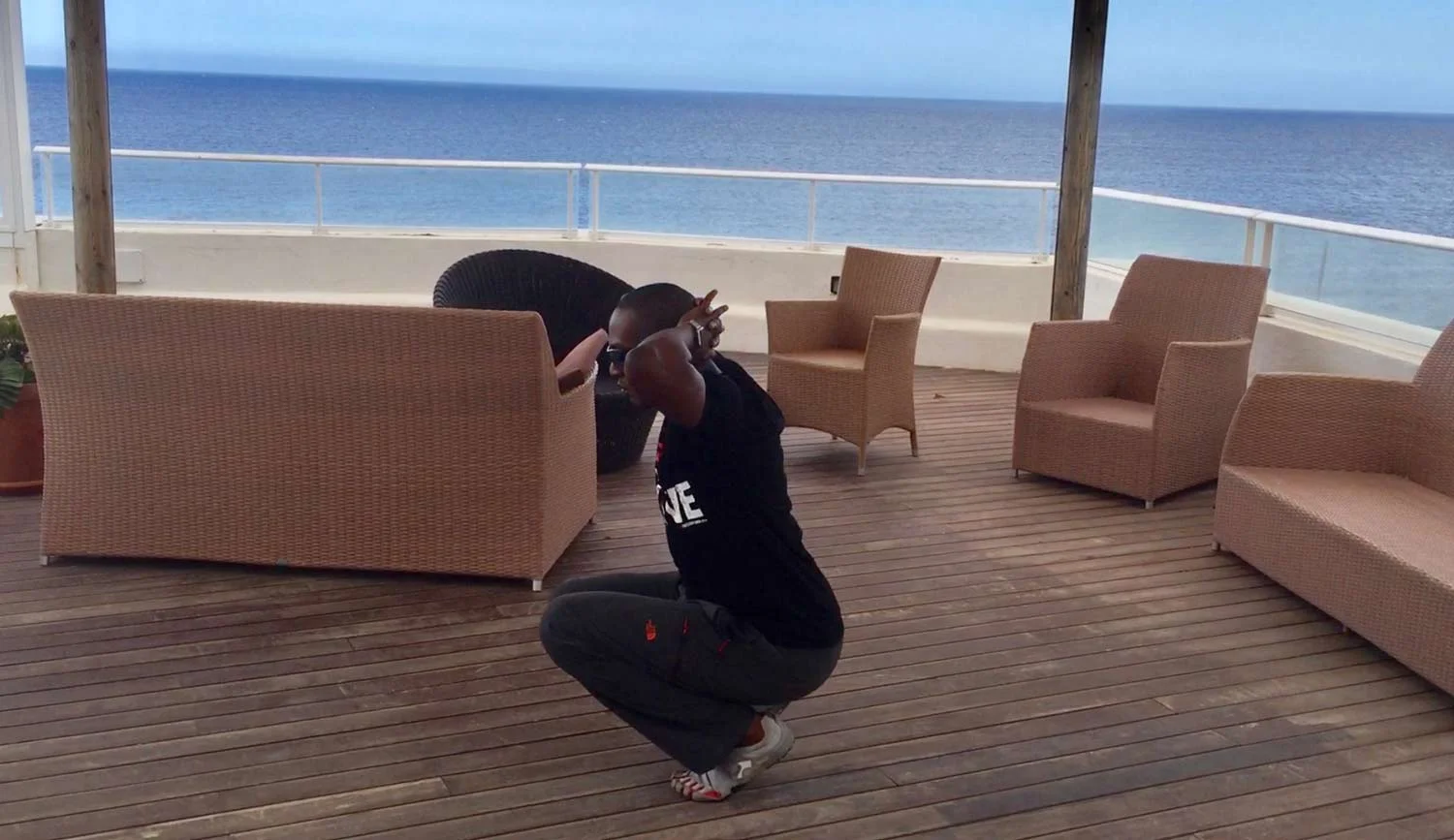
Starting position: low squat, heels raised and torso upright.
Find your starting position. Lower into a comfortable squat with your feet close together. Keep your torso relatively upright.
Raise your heels. Shift your weight towards the balls of your feet, maintaining control and balance.
Position your hands. In my original Bunny Hop, the hands are clasped behind the head. If you're still learning, keep your arms free for balance.
Make a small hop. Push through both feet and hop a short distance upwards or forwards. Both feet should leave the ground together.
Land with control. Aim for a quiet landing, allowing your ankles, knees and hips to absorb the impact. Avoid locking your joints.
Stay low and repeat. Maintain a squat position that you can control. Begin with a few well-executed hops before experimenting with longer sequences.
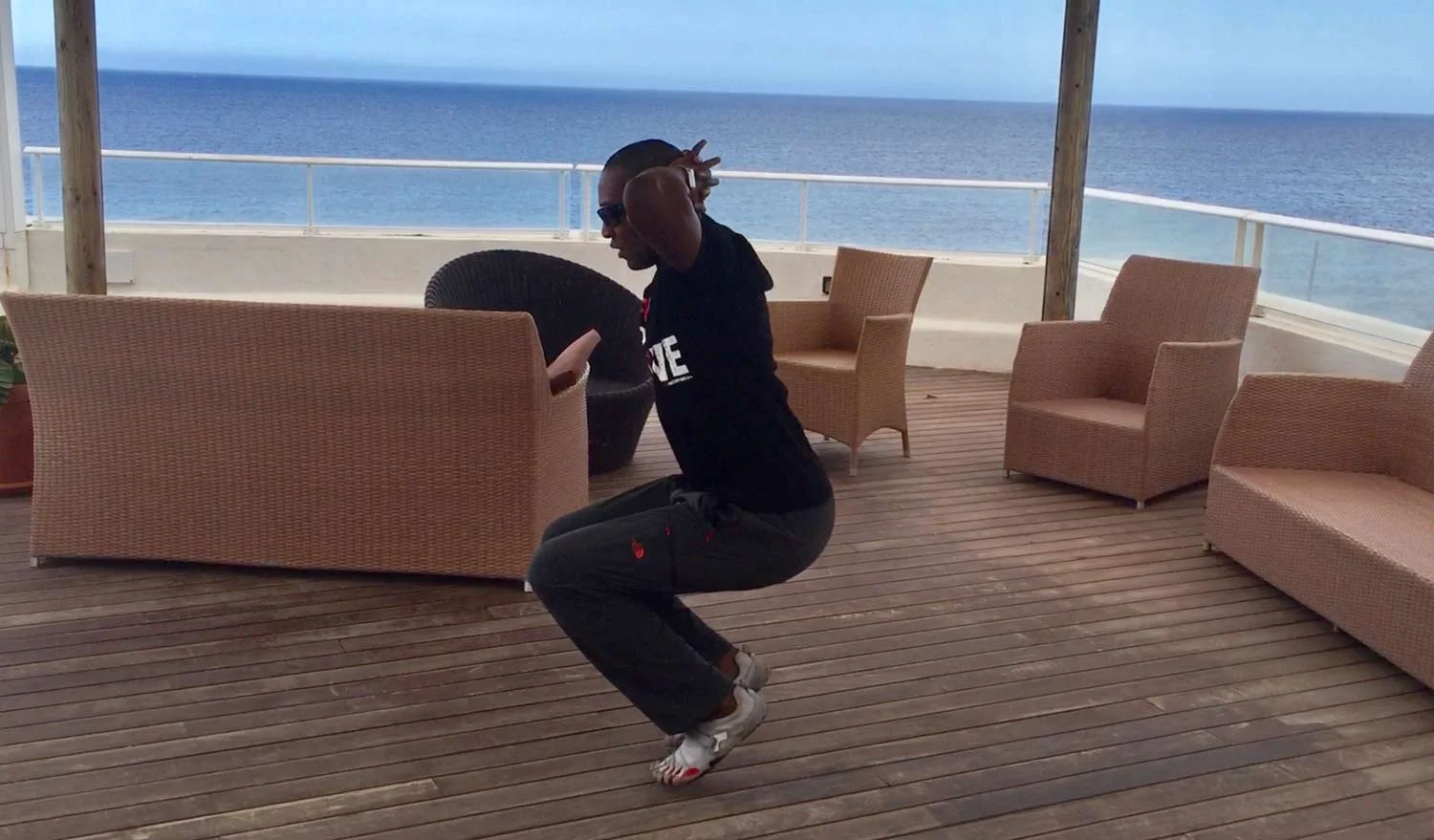
Darryl Edwards performing a two-footed Bunny Hop from a low squat
Watch the Bunny Hop Exercise in Action
Watch me demonstrate the Bunny Hop, including the low-squat position, small two-footed hops and controlled landing. The aim isn't to jump as high or travel as far as possible. Start by making each hop controlled and repeatable.
My favourite cue: stay low, hop small and land softly.
Focus on the quality of each movement rather than the speed or number of repetitions.
What Does the Bunny Hop Exercise Work?
Although the Bunny Hop looks playful, it can be a demanding lower-body movement.
Lower-Body Muscles
The quadriceps and gluteal muscles help maintain the squat and produce the movement, while the calves contribute to pushing off and controlling the landing.
Holding a low position can also challenge muscular endurance.
Balance and Coordination
Each hop requires you to organise your body for take-off and landing. Moving forwards or changing direction adds demands on balance, spatial awareness and movement control.
Power and Conditioning
The repeated jumping action places a rapid demand on the muscles and tendons of the lower body.
More energetic sequences can also raise your breathing and heart rate. How much conditioning benefit you gain depends on your effort, duration and overall training.
Bunny Hops offer one movement challenge among many. They aren't a substitute for a well-rounded strength or cardiovascular training programme.
Bunny Hop Variations: Make It Easier or Harder
Easier: Practise the Position
Start with a comfortable squat, using a stable support if needed. Practise shifting your weight towards the balls of your feet or performing controlled heel raises.
You can also reduce the squat depth. This helps you explore the movement without immediately introducing repeated jumping.
Easier: Small Upright Hops
If you're comfortable jumping but not yet with hopping from a deep squat, try small two-footed hops from a more upright position.
This is a preparation exercise rather than the full Bunny Hop.
Original Bunny Hop
Perform small, controlled hops from a low squat, keeping your feet close together and your body relatively upright.
Start on the spot before travelling forwards.
Bunny Hop 90
Bunny Hop 90s are a more playful variant. Add a quarter-turn between hops. Begin with a small, controlled rotation and make sure you're balanced before the next repetition.
Bunny Hop 360
For experienced movers, progressively explore larger turns. Try a full circle, Bunny Hop 360. Work through quarter-turns and half-turns before considering a full rotation.
The challenge is to control the landing, not simply to complete the turn.
Progress when you're ready, not because a more difficult variation looks impressive.
Turn Bunny Hops Into Active Play
Here's where a movement exercise becomes a playful experience.
Rather than simply counting repetitions, create a movement problem to solve.
Try these three challenges:
The Quiet Landing Challenge: How softly can you land three controlled Bunny Hops?
The Bunny Trail: Place a few markers on a suitable surface and hop towards them, adjusting the distance to your ability.
Follow the Leader: With a partner, take turns choosing a direction or movement pattern for the other person to copy.
You don't need to turn everything into a competition.
Sometimes the challenge is simply to explore what you can do, discover a new variation or enjoy moving differently.
Play is not the activity, but the attitude.
TRY A BUNNY HOP ALTERNATIVE : a 360 degree version of the Bunny Hop
Common Bunny Hop Mistakes
Trying to jump too far or too high. Start with smaller hops. Distance and height are optional challenges, not requirements.
Landing with stiff legs. Allow your joints to bend and absorb the impact. Focus on control rather than bouncing as quickly as possible.
Forcing an excessively deep squat. Use a depth you can manage without losing balance or control. Your comfortable range of motion may differ from someone else's.
Continuing when technique deteriorates. Rest when landings become noisy, uncontrolled or uncomfortable.
A few good-quality hops are more useful for learning the movement than a long sequence performed without control.
Are Bunny Hops Suitable for Everyone?
Bunny Hops are an impact-based exercise involving repeated knee and ankle loading, particularly when performed from a deep squat.
They won't suit every person, joint or stage of training.
If jumping causes pain, you have difficulty controlling a squat, or you have a condition that limits your tolerance for impact, choose a lower-impact alternative. Following an injury or operation, return to jumping should be guided by your individual recovery and relevant clinical advice.
There's no need to force this particular movement.
The playful attitude is available to everyone, even when the exercise needs adapting.
Frequently Asked Questions
Are Bunny Hops a good exercise for beginners?
The full low-squat Bunny Hop can be quite demanding. Beginners may prefer to practise a supported squat, heel raises or small upright hops first. Progress towards the original movement when you can control the position and landing.
How many Bunny Hops should I do?
Start with a few controlled repetitions, such as three to five, and assess how they feel. Rest between attempts. There's no universal target: technique, experience, comfort and training goals matter more than chasing a particular number.
Are Bunny Hops good for your knees?
Bunny Hops load the knees, ankles and surrounding tissues. Whether they're suitable depends on your current capacity, symptoms and tolerance for impact. They are not automatically harmful or protective. If they cause pain, stop and choose a more appropriate variation.
What's the difference between a Bunny Hop and a Rabbit Walk?
In this Animal Moves version of the Bunny Hop, both feet hop together while you remain in a squat, without putting your hands on the ground.
The Rabbit Walk is a different movement that uses the hands and arms to support and move the body.
Explore More Animal Moves
The Bunny Hop is just one way to experiment with movement.
Explore the Bunny Hop 90 and Bunny Hop 360 for playful challenges, or try the Rabbit Walk and Kangaroo Jump for different animal-inspired movement patterns.
You can also discover more crawling, balancing, climbing, carrying and jumping activities in Primal Play in Practice, the movement library of the Primal Play Method®.
Train Animal. Move Human.
And remember: you don't always need another reason to exercise.
Sometimes you just need an excuse to play.
RELATED POSTS:

TRAIN ANIMAL MOVE HUMAN

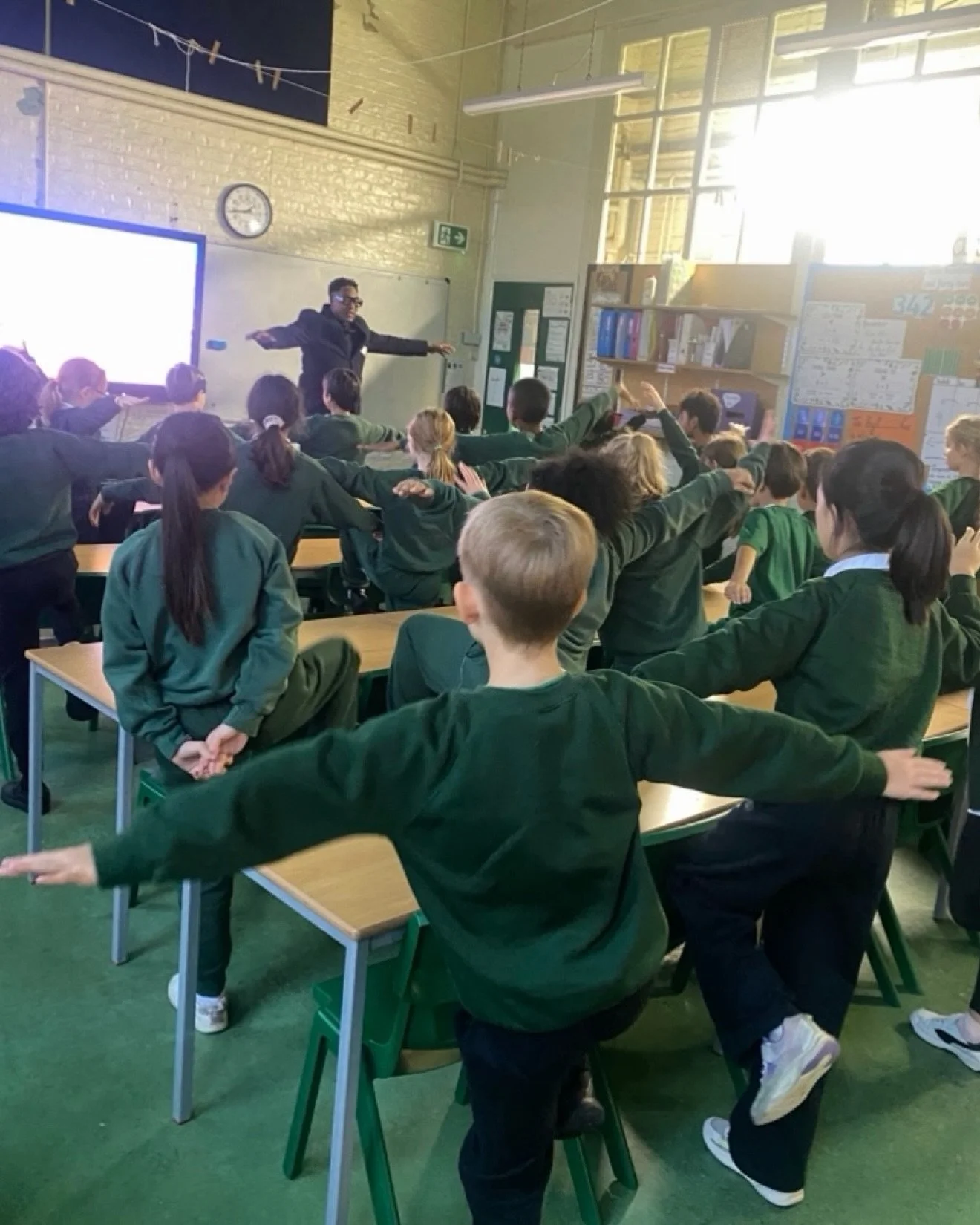

Crane Pose - Animal Moves Exercise