

Play Psychology and Physical Activity Adherence: The Science Behind the Primal Play Method®
Play psychology helps explain how enjoyment, choice, challenge, competence, connection and the experience of movement can influence motivation and continued participation in physical activity.
Within the Primal Play Method®, play psychology primarily focuses on HOW movement is experienced and whether people want to REPEAT it.
This matters because physical activity only produces lasting health and functional benefits when people participate often enough, and for long enough, for adaptation to occur.
Movement provides the stimulus. Adherence enables repetition. Repetition drives adaptation.
The Primal Play Method® therefore considers the psychological experience of movement alongside its physiological stimulus.
What is play psychology?
Play psychology examines how people experience and engage in play, including the motivational, emotional, cognitive and social processes involved.
There is no single universally accepted definition of play.
Play commonly involves characteristics such as voluntary participation, intrinsic motivation, enjoyment, exploration, flexibility, challenge, imagination and social interaction. Which characteristics matter most depends on the person and context.
Playfulness is related, but different.
Play describes an activity or experience. Playfulness describes a way of approaching an activity.
Philosopher Miguel Sicart describes playfulness as an attitude that allows people to engage with situations in a playful way.[1]
This distinction matters for movement.
Running, lifting, walking, balancing or throwing do not automatically become play because of the movement being performed. The same physical activity can feel repetitive and externally controlled to one person, yet playful and engaging to another.
The experience changes depending on how the activity is framed, chosen, and performed.
This principle sits at the centre of the Primal Play Method®:
Play is not the activity, but the attitude.
Why does play psychology matter for physical activity?
Knowing that physical activity improves health does not guarantee that people will keep doing it.
Many interacting factors, including health, time, environment, access, habits, social support, identity, motivation and the experience of the activity itself influence long-term physical activity behaviour.
A systematic review of 68 qualitative studies examining how adults maintain physical activity identified enjoyment and other psychological processes alongside habits, social influences, health factors and practical circumstances.[2]
Play psychology gives us another way to examine this behavioural problem.
Instead of considering only:
What movement should someone do?
we can also ask:
What makes this movement worth repeating?
That question connects play psychology directly with physical activity adherence.
Play psychology and physical activity adherence
Adherence describes the extent to which someone continues to participate in an intended behaviour or programme over time.
Physical activity adherence is complex. No single psychological factor guarantees continued participation.
Evidence does, however, support several mechanisms that are highly relevant to playful movement.
Enjoyment and affect
How movement feels can influence whether someone chooses to repeat it.
A systematic review examining affective responses to exercise found that more positive feelings during physical activity were associated with subsequent physical activity behaviour.
Enjoyment also appears repeatedly in research examining physical activity maintenance.[2]
This does not mean every movement session needs to feel easy or pleasurable.
Challenge, effort and temporary discomfort can form part of an enjoyable experience.
The practical question is whether the overall experience gives someone sufficient reason to return.
Play can create opportunities to alter that experience through variation, exploration, challenge, interaction and choice.
Choice and autonomy
Self-Determination Theory provides one useful framework for understanding sustained motivation.
It proposes three basic psychological needs:
Autonomy: experiencing choice and personal agency.
Competence: feeling capable of meeting a challenge.
Relatedness: feeling meaningfully connected with others.
Research applying Self-Determination Theory to physical activity consistently links more autonomous forms of motivation with participation.
A 2025 review of the evidence found that Self-Determination Theory-informed interventions can produce small-to-moderate improvements in physical activity and health behaviours, with autonomous motivation, support for psychological needs and competence among the mechanisms involved.[4]
An earlier systematic review also found autonomous motivation and competence to be positively associated with exercise participation, with intrinsic motivation appearing particularly relevant to longer-term adherence.[5]
The Primal Play Method® applies these principles practically.
People can be given meaningful choices over movements, challenges, partners, rules, intensity or ways of completing a task.
Choice changes the participant from someone following instructions into someone helping shape the experience.
Challenge and competence
Play often involves uncertainty:
Can I make the throw?
Can I balance for longer?
Can we solve this movement problem?
Can I find another way to get from here to there?
The outcome cannot be guaranteed in advance.
An appropriate challenge creates an opportunity to build competence.
Too little challenge can become monotonous. Excessive challenge can create frustration, fear or withdrawal.
The useful level sits somewhere between them and varies from person to person.
This makes adaptation central to playful movement.
A movement can be simplified, progressed, slowed down, made more complex or given different rules while preserving the purpose of the activity.
For children, adults, older adults and people living with health conditions, the movement itself may change considerably while the psychological principles remain relevant.
Feedback
Play naturally produces feedback.
A ball reaches its target or misses it.
Balance is maintained or lost.
A partner responds.
A movement solution works or needs adjusting.
This information can make practice meaningful without requiring constant external instruction.
Feedback also supports learning and perceptions of competence when tasks are appropriately designed.
Within the Primal Play Method®, feedback can come from the activity, the environment, another participant or the practitioner.
The aim is to help people engage with movement rather than simply complete repetitions.
Social connection
Movement can also become a social experience.
Partners and groups can introduce cooperation, communication, shared goals, competition and social support.
Social influences are consistently identified among factors affecting physical activity maintenance.[2]
The type of interaction matters.
Competition can motivate one person and discourage another. Group activity can create belonging for some people and social discomfort for others.
Play therefore requires adaptation to the individual as well as the physical task.
What does adult playfulness tell us?
Play is often treated as something people leave behind in childhood.
Research on adult playfulness suggests a more nuanced picture.
Adult playfulness has been described as a tendency to frame or reframe situations in ways that make them entertaining, stimulating or personally interesting.
In observational research, higher adult playfulness has been associated with a more active lifestyle and some indicators of physical fitness.[6]
These findings are interesting, but they do not establish that becoming more playful causes someone to become more physically active.
That distinction matters.
The evidence for adult playfulness and physical health remains smaller than the evidence supporting physical activity itself.
The Primal Play Method® therefore uses playfulness as a practical behavioural approach, rather than presenting it as a medical treatment.
How does play psychology contribute to the Primal Play Method®?
The Primal Play Method® draws on four scientific domains:
Cognitive neuroscience
Exercise physiology
Evolutionary biology
Play psychology
Each addresses a different part of the movement problem.
The Method uses the framework:
WHY → HOW → WHAT → DOSE → REPEAT
WHY
Why does movement matter for this person?
The reason may involve health, independence, strength, cognition, recovery, social connection, performance or something personally meaningful.
HOW
How can the movement experience support participation?
This is where play psychology has its strongest influence.
Choice, challenge, competence, enjoyment, feedback, autonomy and connection can change how movement is experienced.
WHAT
What type of movement is suitable?
Exercise physiology, function, goals, capability, health status and individual circumstances help shape movement selection.
DOSE
How much movement is appropriate?
Frequency, intensity, duration, volume and progression need to match the individual and the intended outcome.
REPEAT
Can the person keep participating?
Play psychology becomes important again here.
A physiologically effective programme has limited value when someone repeatedly stops doing it.
The Primal Play Method® therefore asks whether movement can be sustained, adapted and restarted across changing circumstances.
Play psychology does not replace exercise physiology.
A playful activity can still provide too little stimulus for a particular health or performance goal.
It can also provide too much.
Enjoyment does not determine whether movement is clinically appropriate.
Exercise physiology helps establish the stimulus and dose required to adapt. Play psychology helps us consider how that movement is experienced and whether participation is likely to continue.
The Primal Play Method® brings these questions together.
For example, a strength activity can be:
physiologically appropriate,
adapted to someone’s capacity,
challenging enough to create a training stimulus,
and delivered in a way that provides choice, feedback or social interaction.
WHAT and DOSE influence adaptation. HOW influences the experience. REPEAT determines whether there are enough opportunities for adaptation to occur.
Does physical activity have to feel like play?
No.
Walking to work, structured strength training, rehabilitation exercises, cycling, gardening and organised sport can all contribute meaningfully to physical activity.
The Primal Play Method® does not require every movement to become a game.
Play psychology provides principles that can make movement more engaging, adaptable and personally meaningful when appropriate.
Sometimes that means introducing a game.
Sometimes it means giving someone more choice.
Sometimes it means changing the challenge.
Sometimes it means moving with another person.
Sometimes the movement remains structured while the attitude towards it becomes more exploratory.
Is fun enough to make people physically active?
No single factor is enough.
Physical activity behaviour is affected by health, pain, fatigue, disability, opportunity, environment, socioeconomic circumstances, habits, confidence, access, social support and many other influences.
Enjoyment matters, but enjoyment cannot remove every barrier.
The evidence supports a broader approach.
People need opportunities to move that are appropriate, accessible, meaningful and repeatable.
Play psychology addresses part of that equation.
What role can play have in exercise medicine?
Exercise medicine requires appropriate movement selection and dose.
It also has a behavioural challenge.
A theoretically effective exercise prescription cannot produce its intended long-term effects when participation repeatedly stops.
This becomes particularly relevant when people are managing:
ageing and loss of physical function,
long-term health conditions,
cancer treatment and recovery,
pain or osteoarthritis,
deconditioning,
low confidence,
fear of movement,
or previous negative experiences with exercise.
In these settings, playful movement must remain appropriate to the person’s health, capability and clinical context.
Play psychology helps practitioners consider autonomy, confidence, challenge, feedback, enjoyment, and social connection alongside the physical prescription.
It provides another question for exercise medicine:
How can we make an appropriate movement prescription more possible to repeat?
The four scientific pillars of the Primal Play Method®
Play psychology is one part of the framework.
Evolutionary biology provides a framework for understanding human movement behaviour, physical activity and movement diversity within an evolutionary context.
Exercise physiology explains the body’s responses and adaptations to movement, including strength, cardiorespiratory fitness, metabolic health and physical function.
Cognitive neuroscience helps explain brain health, attention, executive function, motor learning and neuroplasticity.
Play psychology helps explain how motivation, autonomy, challenge, enjoyment, connection and playfulness can influence the movement experience and continued participation.
Together, these domains help the Primal Play Method® address both sides of the physical activity problem:
What movement can improve health and function?
and
What helps people keep moving?
Frequently Asked Questions
What is play psychology?
Play psychology examines the psychological processes associated with play and playfulness, including motivation, emotion, autonomy, challenge, learning and social interaction.
How can play support physical activity adherence?
Play can introduce enjoyment, choice, challenge, feedback, competence and social interaction into movement. These factors can influence motivation and the experience of physical activity. Long-term adherence is still affected by many personal, social, environmental, and health factors.
Is enjoyable exercise more likely to be repeated?
Research suggests that positive affect during physical activity and enjoyment can be associated with future participation. The relationship is probabilistic, not guaranteed. Access, health, habits, social support and practical barriers also influence maintenance.
Does the Primal Play Method® turn exercise into games?
Sometimes, but games are only one option. The Primal Play Method® can use playful principles such as choice, curiosity, challenge, feedback, variation and social interaction within many forms of movement.
What are the four scientific pillars of the Primal Play Method®?
The four pillars are cognitive neuroscience, exercise physiology, evolutionary biology and play psychology. Together they inform how movement is understood, selected, experienced, adapted and repeated.
Why is adherence important in exercise medicine?
Many physiological benefits of physical activity depend on repeated exposure to an appropriate movement stimulus. Adherence affects whether enough movement occurs over time for those adaptations to develop and be maintained.
Explore the science behind the Primal Play Method®.
Learn more about the Primal Play Method® and how its four scientific pillars work together.
Explore the Exercise Science Research resource for evidence on physical activity, health, strength, healthy ageing, brain health, exercise oncology and adherence.
Continue with the other scientific pillars:
Evolutionary Biology and Human Movement
Exercise Physiology and Active Play
Cognitive Neuroscience and Active Play
Explore the four scientific pillars of the Primal Play Method®
References
Sicart M. Play Matters. MIT Press; 2014. https://doi.org/10.7551/mitpress/10042.001.0001
Madigan CD, Grimmett C, Sweet SN, Daley AJ, Kettle VE, Phillips B, Graham HE. Understanding adult's experiences and perceptions of how to maintain physical activity: a systematic review and qualitative synthesis. Int J Behav Med. 2025;32(5):687–701. https://doi.org/10.1007/s12529-024-10335-w
Rhodes RE, Kates A. Can the affective response to exercise predict future motives and physical activity behavior? A systematic review of published evidence. Ann Behav Med. 2015;49(5):715–731. https://doi.org/10.1007/s12160-015-9704-5
Ntoumanis N, Moller AC. Self-determination theory informed research for promoting physical activity: contributions, debates, and future directions. Psychol Sport Exerc. 2025;80:102879. https://doi.org/10.1016/j.psychsport.2025.102879
Teixeira PJ, Carraça EV, Markland D, Silva MN, Ryan RM. Exercise, physical activity, and self-determination theory: a systematic review. Int J Behav Nutr Phys Act. 2012;9:78. https://doi.org/10.1186/1479-5868-9-78
Proyer RT, Gander F, Bertenshaw EJ, Brauer K. The positive relationships of playfulness with indicators of health, activity, and physical fitness. Front Psychol. 2018;9:1440. https://doi.org/10.3389/fpsyg.2018.01440

The science behind the Primal Play Method: Play Psychology

Time To Play…
RELATED POSTS:

Why Play Psychology is an important aspect of the Primal Play Method®
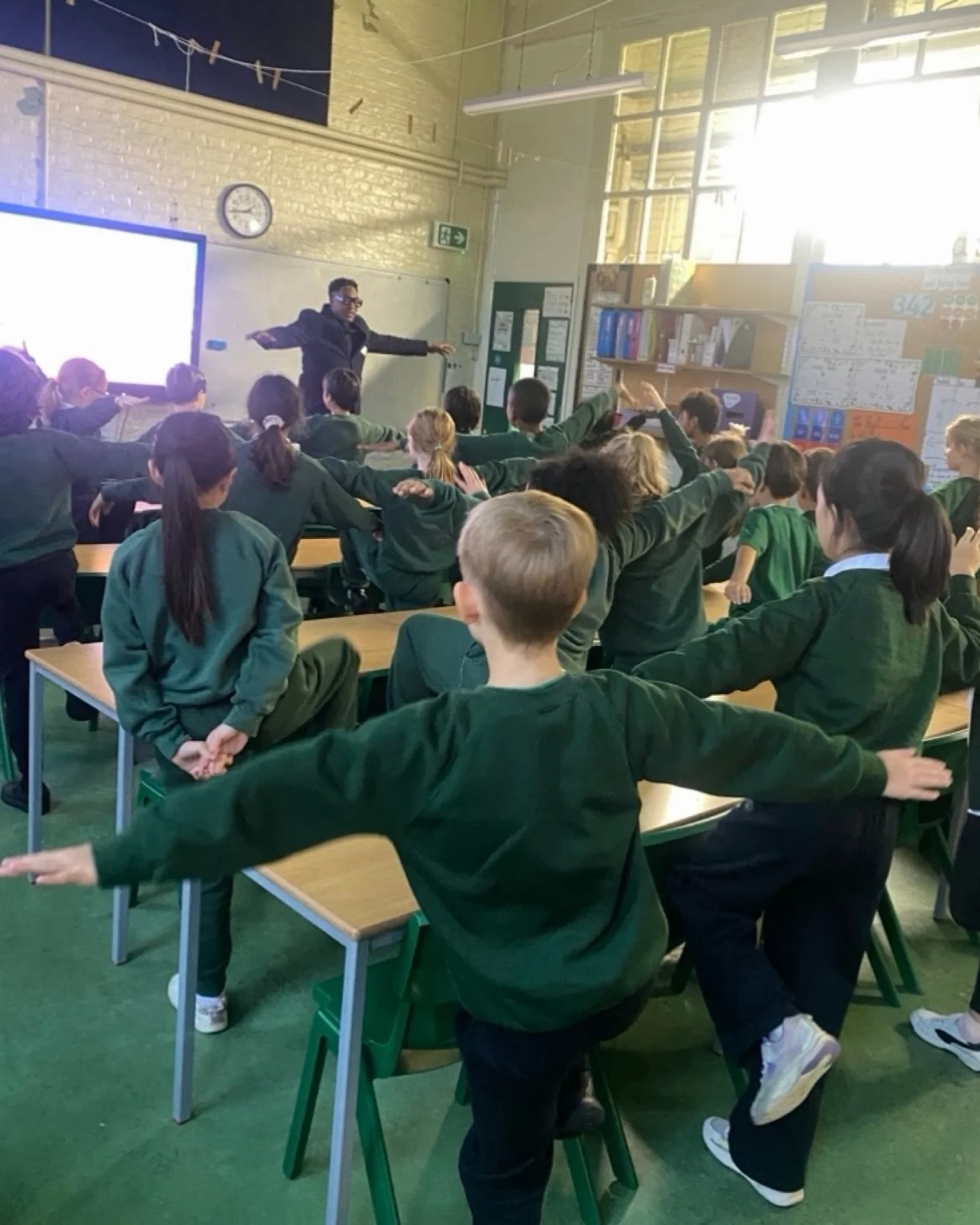

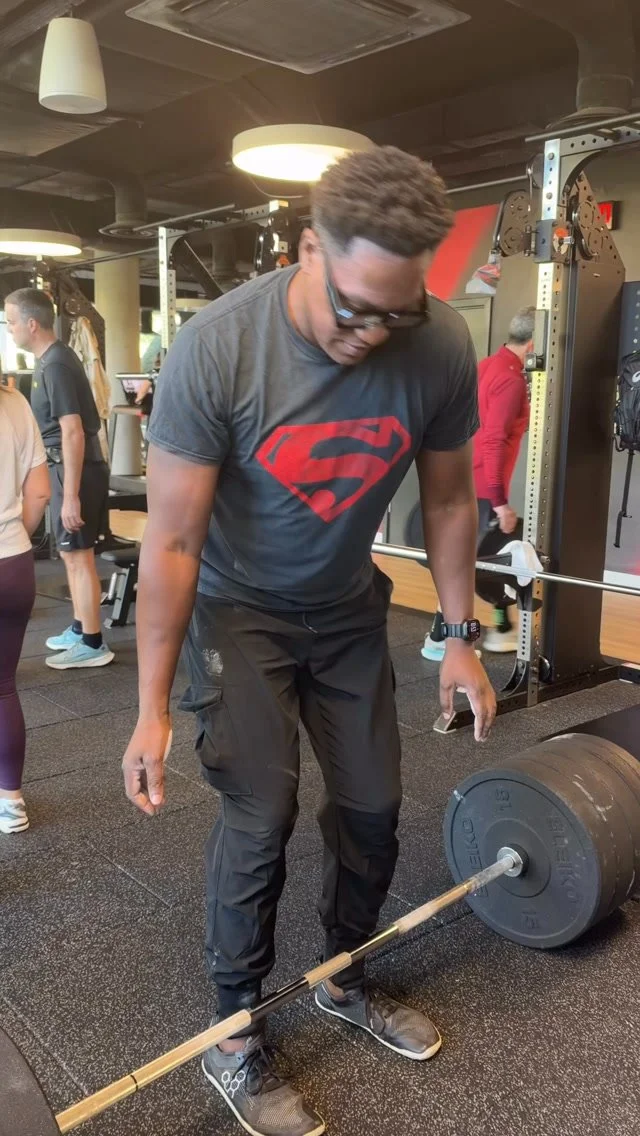

Evolutionary biology helps explain why human bodies developed the capacity for varied physical activity across different environments. In the Primal Play Method®, it explains why movement matters, the range of movement humans can perform, and how modern environments can reduce everyday physical activity.