

Darryl Edwards: Exercise Medicine, Active Play & Physical Activity Adherence
Darryl Edwards MSc, FCIMSPA (Chartered), FBSLM, DFSEM(UK), DipExMed, CertLM is a CIMSPA Chartered Fellow, Physical Activity and Health Senior Practitioner, author and international speaker specialising in physical activity adherence, exercise and lifestyle medicine, active play across the lifespan, healthy ageing and exercise oncology.
He is the founder of the Primal Play Method® and Movement Oncology™.
Primal Play Method®
The Primal Play Method® is an evidence-informed approach to physical activity that combines evolutionary biology, exercise physiology, cognitive neuroscience, and play psychology to support engagement and sustained participation.
Movement Oncology™
Movement Oncology™ combines evidence-based exercise principles with practical strategies to support safer, more relevant and sustainable participation in movement across different stages of cancer care.
Across both approaches, Darryl's work focuses on a central challenge: helping people consistently engage in movement to achieve meaningful health and physical benefits.
What Is Darryl Edwards Known for?
Darryl Edwards is known for his work on physical activity adherence (sticking with regular movement over time) and for developing the Primal Play Method®, an evidence-informed approach designed to make movement more engaging and sustainable.
His work examines a persistent challenge in exercise and public health: knowing that physical activity is beneficial does not always lead to sustained participation.
Darryl combines exercise physiology with cognitive neuroscience, evolutionary biology and play psychology to understand how factors such as enjoyment, autonomy, challenge, feedback and connection can influence engagement and repeated participation.
His work applies these principles across healthcare, healthy ageing, exercise oncology, education and workplace wellbeing.
Movement improves outcomes. Adherence determines whether those outcomes can occur.
Physical Activity Adherence
Exercise physiology helps us understand the dose of movement needed to create adaptation and meaningful outcomes. Physical activity guidelines tell us what people should do. Behaviour determines whether they keep doing it. This is the challenge of sustaining physical activity over time.
Darryl’s work focuses on how the experience of movement influences whether people return, repeat and participate consistently enough to gain meaningful health and physical benefits.
Active play may support sustained participation by creating movement experiences that increase enjoyment, autonomy, challenge, feedback and connection.
Playful experience → engagement → repetition → sufficient movement dose → adaptation
This model connects exercise science with the behavioural mechanisms that influence participation.
A Framework for Physical Activity Adherence
Darryl’s work integrates four scientific and behavioural perspectives to understand why people engage with movement, what helps them continue, and how repeated participation leads to physical adaptation.
Evolutionary Biology
Evolutionary biology provides context for understanding human movement needs and behaviour. Humans developed in environments where movement was woven into daily life through travel, work, exploration, social interaction and play. Modern environments have reduced many of these demands, creating a mismatch between the movement-rich environments in which humans evolved and increasingly sedentary modern lifestyles.
Exercise Physiology
Exercise physiology explains the physical dose required to produce change. It considers intensity, volume, frequency, recovery and the specific stimulus needed to improve strength, cardiovascular fitness, mobility or other outcomes. Adherence matters because physiological adaptation depends on repeated exposure to an appropriate movement stimulus over time.
Cognitive Neuroscience
Cognitive neuroscience helps explain how the brain responds to movement experiences. Attention, reward, prediction, decision-making, learning and feedback all influence how movement is experienced and remembered. These processes can shape motivation, perceived competence and the likelihood that someone chooses to repeat an activity.
Play Psychology
Play psychology explores the qualities that make movement engaging. Autonomy, competence, curiosity, enjoyment, challenge and social connection can strengthen intrinsic motivation and encourage continued participation. These elements help create movement experiences people are more likely to value, repeat and sustain.
Together, these perspectives help explain how movement experiences can influence engagement, repetition and ultimately physiological adaptation.
Professional Qualifications and Credentials
Darryl Edwards is a CIMSPA (Chartered Institute for the Management of Sport and Physical Activity) Chartered Fellow, Physical Activity and Health Senior Practitioner, with professional qualifications spanning exercise medicine, lifestyle medicine, cancer exercise, healthy ageing and exercise physiology.
Chartered Fellow with CIMSPA with the designation FCIMSPA (Chartered).
Diplomate, Faculty of Sport and Exercise Medicine (UK), DFSEM(UK)
Diploma in Exercise Medicine, DipExMed
Certified in Lifestyle Medicine (CertLM)
ACSM Cancer Exercise Specialist®
GLP-1 Exercise Specialist
Functional Ageing Specialist
Brain Fitness Coach
Earlier professional training includes a Level 6 Diploma in Exercise Physiology, advanced nutritional studies, movement coaching, strength and conditioning, exercise for managing low back pain, and advanced personal training.
Movement as Medicine
Darryl’s work translates evidence from exercise and lifestyle medicine into practical ways to help people move more, move well and stay active over time.
His work spans physical activity adherence, healthy ageing, exercise oncology, obesity and GLP-1 treatment, brain health, strength, sedentary behaviour and mental wellbeing.
Across these areas, the focus is consistent: understanding which types of movement support the desired outcome, what helps people continue participating, and how regular physical activity can improve health, physical capacity, and quality of life.
Movement Oncology™
Movement Oncology™ brings exercise and physical activity into the cancer journey, from prevention and treatment through rehabilitation and survivorship.
Darryl is an ACSM Cancer Exercise Specialist® with qualifications in exercise medicine and lifestyle medicine. His work focuses on helping people maintain or rebuild physical function, fitness, strength and confidence while supporting sustained participation in movement.
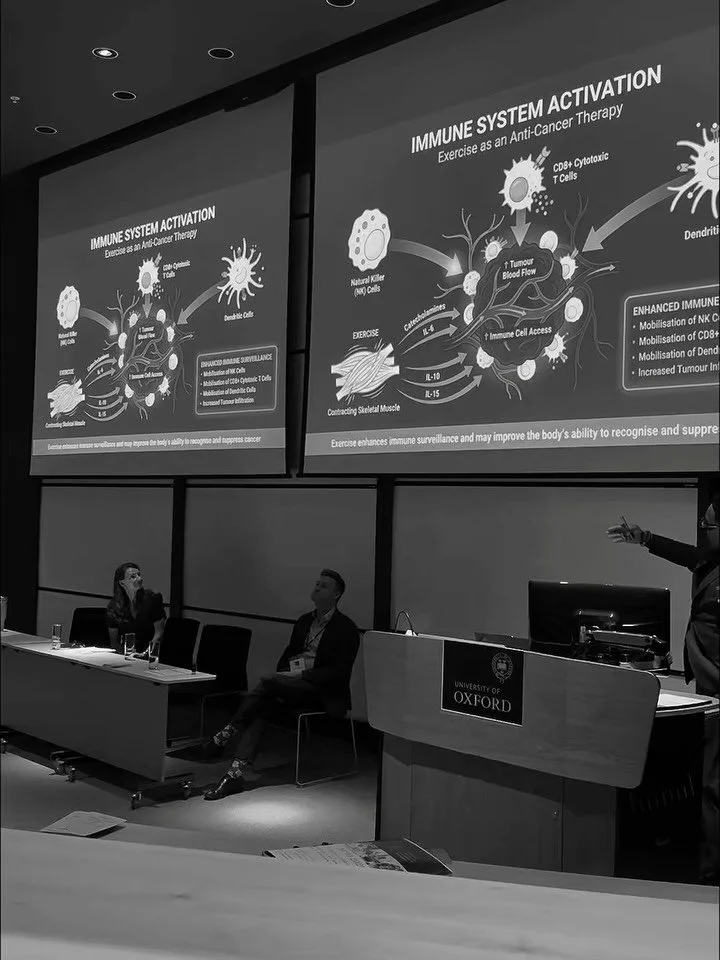
He has presented on physical activity and cancer for organisations including the European Society for Medical Oncology, HCA Healthcare UK, the Princess Alexandra Hospital NHS Trust and the British Society of Lifestyle Medicine.
Movement Oncology™ combines evidence-based exercise principles with practical strategies to make movement safer, more relevant, and sustainable for participation in movement across different stages of cancer care.
Movement, Long-Term Health and Physical Function
Darryl’s work also explores how physical activity can support people living with long-term health conditions by helping preserve or improve physical function, fitness, strength and confidence in movement.
His approach draws on exercise medicine, behaviour change and physical activity adherence, with an emphasis on adapting movement to the individual, their current capacity and their goals.
Rather than focusing on a single diagnosis, Darryl’s work considers how movement can support everyday function, independence and continued participation across a range of health challenges.
Healthy Ageing and Physical Function
The way we move changes across life. The need for physical capacity does not.
Children build movement foundations. Adults maintain and restore capacity. Older adults increasingly depend on strength, balance, mobility, coordination and cardiorespiratory fitness to preserve function and independence.
Darryl’s work takes this lifespan approach to healthy ageing, with a focus on maintaining the physical capacity and movement confidence needed for everyday life.
The aim is to help people keep doing what matters to them, whether that means playing with children or grandchildren, travelling, working, exercising, or simply moving through daily life with greater independence.
Exercise, Obesity and GLP-1 Treatment
Darryl’s work also explores the role of physical activity alongside modern obesity treatment, including GLP-1 medications.
He focuses on helping people maintain physical function, support muscle strength and physical capacity through resistance exercise, and develop movement habits that can continue beyond changes in body weight or medication use.
He has presented on exercise, obesity and GLP-1 treatment for organisations including the European Congress on Obesity, the Obesity Medical Association, ObesityWeek and the Royal College of Physicians.
This work applies his wider focus on exercise medicine and physical activity adherence to the changing landscape of obesity care.
International Speaking and Professional Education
Darryl has delivered more than 200 workshops, keynote presentations and professional education sessions across 15 countries.
His medical, academic and professional speaking experience includes Harvard Medical School, the European Society for Medical Oncology, the American Academy of Family Physicians, the European Congress on Obesity, the British Society of Lifestyle Medicine, Imperial College London, the National Centre for Integrative Oncology, Bupa, AXA Health and HCA Healthcare UK.
His education, early years and play-focused speaking engagements include keynote presentations at Playtopia 2026 in Boston and the US Play Coalition’s 2026 National Conference on the Value of Play at Indiana University. He has also delivered keynotes at the Early Years Conference 2026 in Northern Ireland and Playposium 2025, where he spoke on the role of play in higher education, and has presented at the Serious Play Conference at Duke University and The Association for the Study of Play (TASP) at The Strong National Museum of Play in Rochester, New York. In 2025, Darryl received the Stephanie P. Garst Distinguished Service Award from the US Play Coalition, recognising sustained and significant contributions to the play movement. His work in these settings explores active play, child development, physical literacy, learning, wellbeing and the science of play across the lifespan.
He has also delivered talks and wellbeing programmes for organisations including Microsoft, Adobe, Deloitte, Starbucks, Virgin Atlantic and Merrill Lynch.
His speaking explores how exercise science, behaviour and active play can improve physical activity adherence across healthcare, healthy ageing, cancer care, obesity, early years, education, workplace wellbeing and lifelong health.
TED TALK
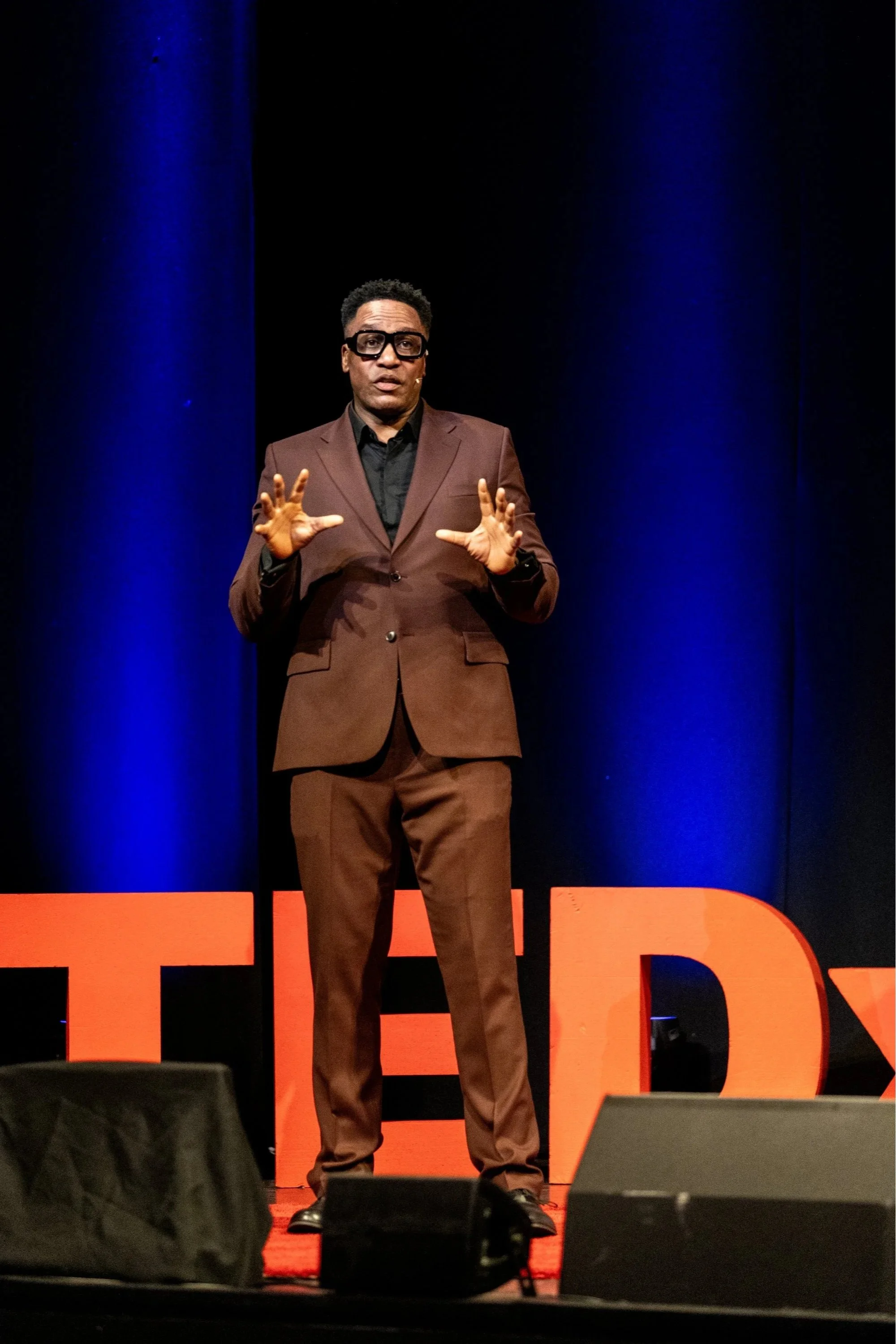
Darryl’s TED Talk, “Why Working Out Isn’t Working Out,” explores why conventional approaches to exercise fail to engage many people and how changing the experience of movement may influence participation.
The talk has been viewed more than 1.3 million times.
BOOKS
Darryl is the author of three books:
Animal Moves: A guide to fitness for adults inspired by the natural world.
My First Animal Moves: Introducing children to the joy of playful movement.
Paleo Fitness: explores how evolutionary principles can inform practical training for strength, mobility, fitness and everyday physical capability.
He also created the Animal Moves Fitness Decks for adults and children.
Research and Published Work
Darryl has contributed to the academic and professional literature on physical activity, play and health.
His published work includes:
No Play No Gain: Is Exercise as Medicine Too Bitter a Pill to Swallow?
Journal of Evolution and Health, 2018.
View publication
The Role of Physical Activity in Breast Cancer Prevention
Journal of Evolution and Health, 2019.
View publication
Why Play is the Best Form of Self-Care
Journal of Holistic Healthcare & Integrative Medicine, 2021.
View publication
His published work reflects long-standing interests in exercise adherence, active play, movement as medicine and the role of physical activity in health.
Media and Expert Commentary
Darryl’s work has been featured by The New York Times, BBC, Men’s Health, Forbes, The Guardian and The Telegraph.
He has also appeared in BBC television documentaries including Doctor in the House, Eat to Live Forever and Inside the Factory.
He has appeared on leading podcasts including Feel Better, Live More with Dr Rangan Chatterjee, The Art of Manliness, The Happy Pear Podcast and The Primal Blueprint Podcast.
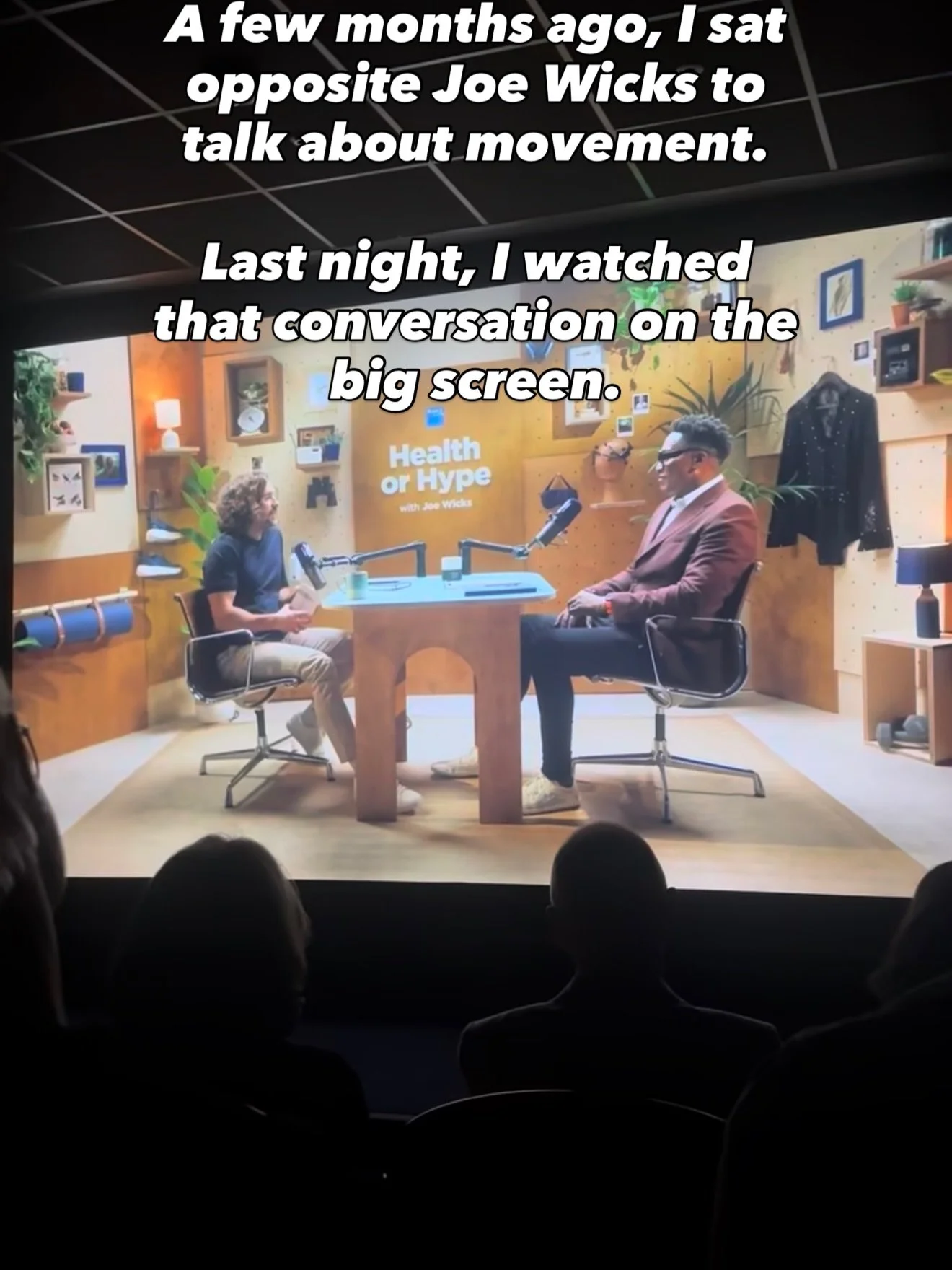
In 2026, Darryl joined Joe Wicks and Bupa for Episode 1: Movement of Health or Hype, discussing physical activity, movement snacks, active play and exercise adherence.
[Read Darryl Edwards on Health or Hype with Joe Wicks].
Darryl provides expert commentary on physical activity, exercise medicine, healthy ageing, active play, exercise oncology, obesity, sedentary behaviour and physical activity adherence.
From Technology to Movement
Before moving into health and physical activity, Darryl spent more than 20 years working in technology, software development and investment banking.
His career included roles with Microsoft, Merrill Lynch, Deutsche Bank, UBS and Royal Bank of Scotland, working across complex systems, financial technology and large organisations.
That background continues to shape how he approaches movement and health. He looks for patterns, mechanisms, and practical solutions, bringing systems thinking to questions of behaviour, physical activity, and long-term health.
The shift from technology to movement was a change of profession, but the way he solves problems remained remarkably consistent.
A Personal Turning Point
In 2005, Darryl survived the London bombings of 7 July. The experience prompted a deeper reassessment of his health, priorities and the direction of his career.
At the time, he worked in investment banking technology and became increasingly aware of the impact a sedentary, high-pressure lifestyle was having on his health.
Over the following years, he transitioned from technology into health, physical activity and exercise medicine. That journey shaped his interest in the relationship between movement, behaviour and long-term health, and ultimately contributed to the development of the Primal Play Method®.
Today, that experience continues to inform a simple principle in his work: movement should support health while also giving people a reason to keep coming back.
Frequently Asked Questions
Who is Darryl Edwards?
Darryl Edwards is a CIMSPA Chartered Fellow, exercise and lifestyle medicine practitioner, author and international speaker specialising in physical activity adherence, active play, healthy ageing and exercise oncology. He founded the Primal Play Method® and Movement Oncology™.
What is Darryl Edwards known for?
Darryl is known for his work on physical activity adherence and for developing the Primal Play Method®. His approach combines exercise physiology, cognitive neuroscience, evolutionary biology and play psychology to help make movement more engaging and sustainable.
What is the Primal Play Method®?
The Primal Play Method® is Darryl Edwards’ evidence-informed approach to physical activity. It combines exercise physiology with play psychology, cognitive neuroscience and evolutionary biology to support engagement, repeated participation and long-term movement behaviour.
What is Movement Oncology™?
Movement Oncology™ is Darryl Edwards’ evidence-informed approach to physical activity and exercise across cancer prevention, treatment, rehabilitation and survivorship, with a focus on physical function, fitness, quality of life and sustained participation.
What qualifications does Darryl Edwards have?
Darryl is a CIMSPA Chartered Fellow and Physical Activity and Health Senior Practitioner, a Diplomate of the Faculty of Sport and Exercise Medicine (UK), a Fellow of the British Society of Lifestyle Medicine, and an ACSM Cancer Exercise Trainer®.
What does Darryl Edwards speak about?
Darryl speaks on physical activity adherence, movement as medicine, active play across the lifespan, early years and education, exercise oncology, healthy ageing, obesity and GLP-1 treatment, brain health, sedentary behaviour and workplace wellbeing.
Where is Darryl Edwards based?
Darryl is based in London, England, and works internationally as a speaker, educator and movement practitioner.
Is Darryl Edwards available for speaking and media?
Yes. Darryl is available for keynotes, conference presentations, professional education, workshops, podcasts, television, radio and expert media commentary.
Work with Darryl Edwards
Darryl works with healthcare organisations, professional bodies, businesses, educators and individuals seeking evidence-based approaches to physical activity, exercise adherence and sustainable movement.
He is available for keynote speaking, conference presentations, professional education, healthcare workshops and corporate speaking.
Through the Primal Play Method®, Darryl provides practitioner education, certification, and training in active play, physical activity adherence, and sustainable movement behaviour.
Through Movement Oncology™, he provides specialist exercise and movement support across cancer treatment, rehabilitation and survivorship.
He is also available for individual movement coaching and for media interviews, podcasts and expert commentary on physical activity, exercise medicine, healthy ageing and related areas.
For speaking, professional education, Movement Oncology™ or media enquiries, contact Darryl through PrimalPlay.com.
Movement Oncology™ | Primal Play Method® | Media Enquiries
Professional biography last updated: September 2026
PHOTOS



SOCIAL MEDIA
Darryl’s LinkedIn:
linkedin.com/in/fitnessexplorer/
Darryl’s Instagram:
instagram.com/fitnessexplorer