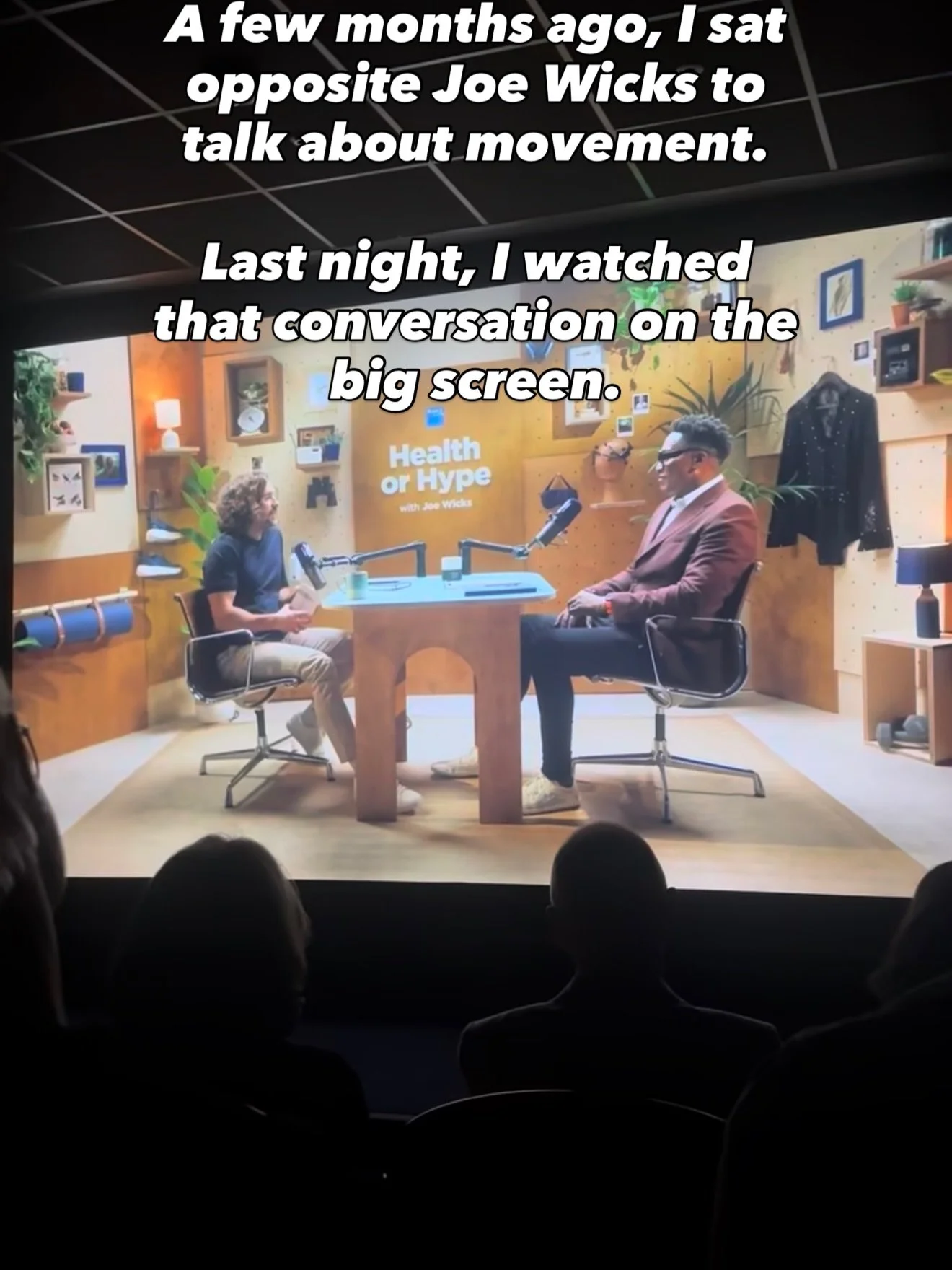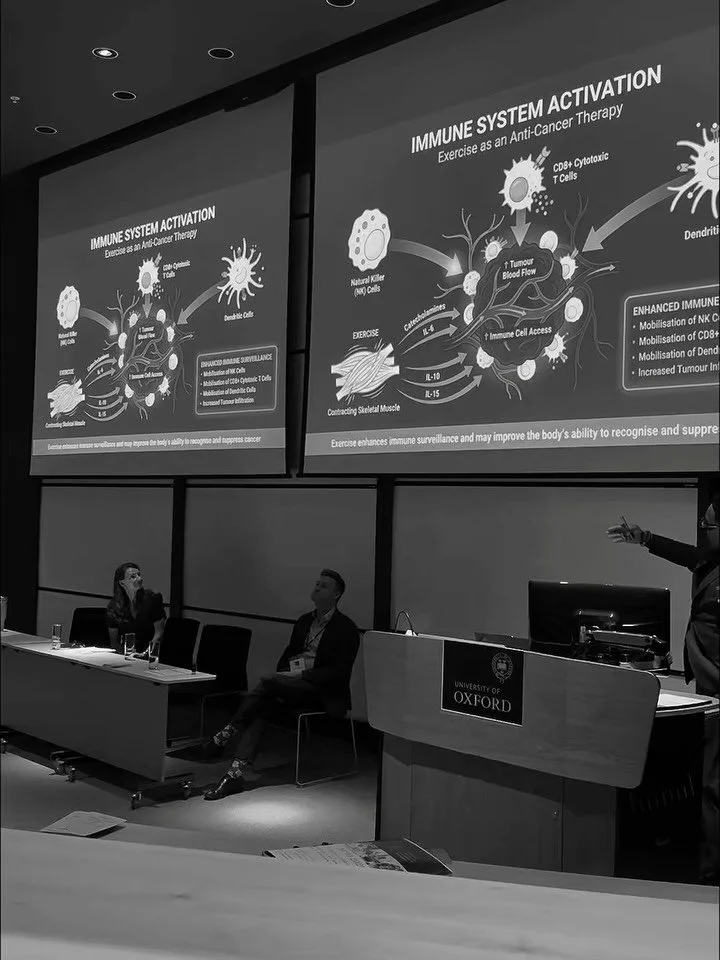
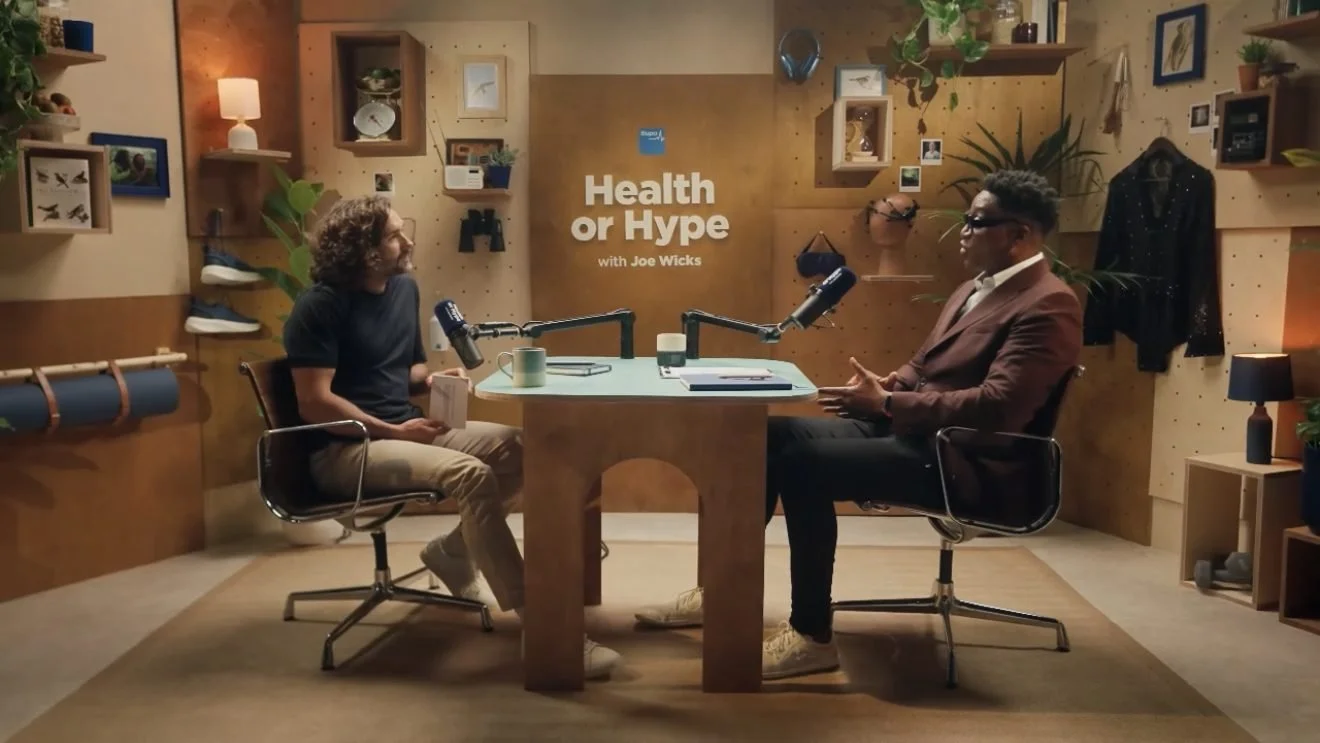
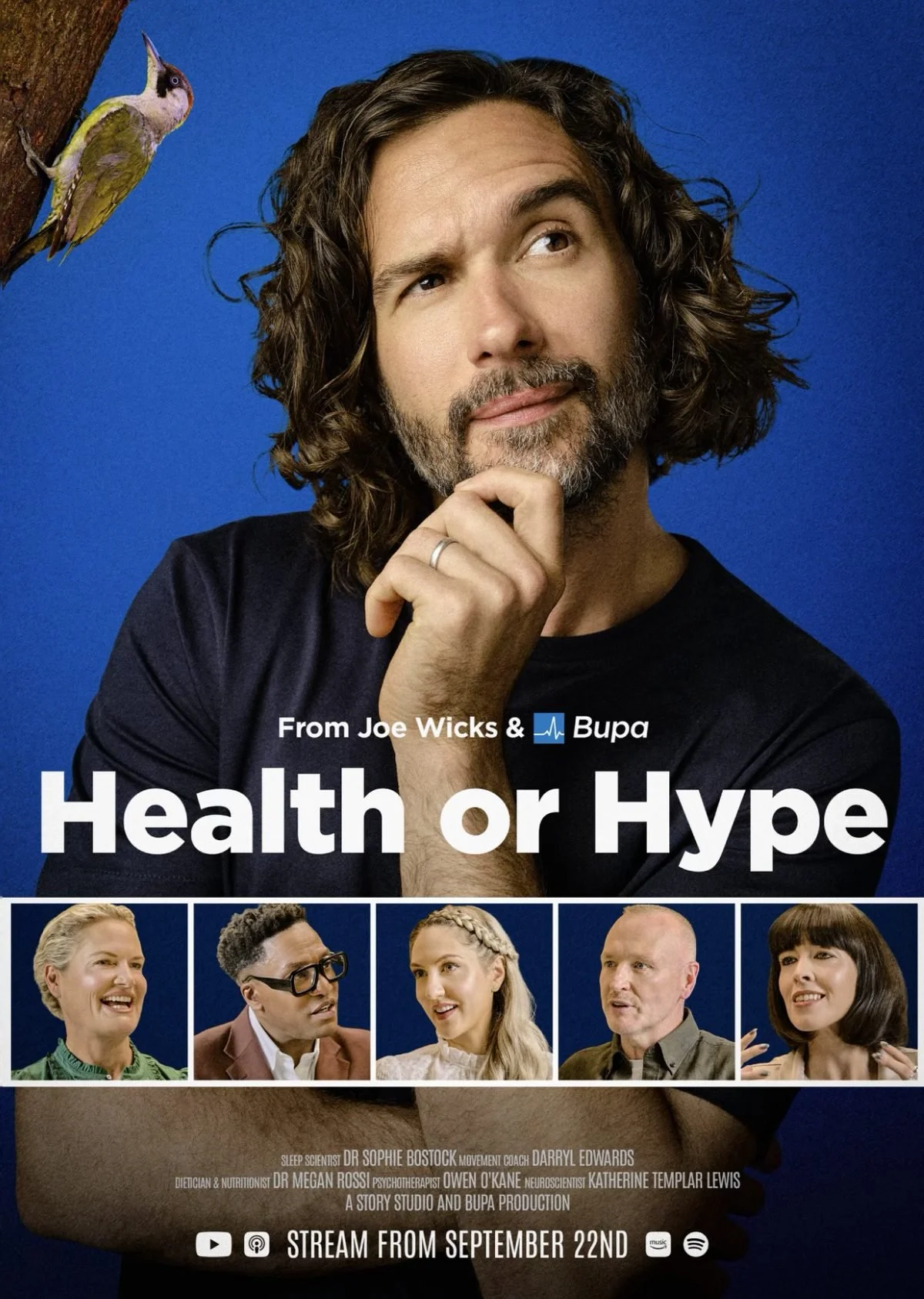
Health or Hype: Movement is Episode 1 of Joe Wicks and Bupa's new video podcast exploring popular health questions through personal experiments and expert discussion. I joined Joe to talk about physical activity, sedentary behaviour, movement snacks, play, mood and why enjoying movement may help us build a more sustainable relationship with physical activity.[1,2]
It gave me an opportunity to explore a question that has shaped my work for years:
How do we help more people want to keep moving?
Watch the Health or Hype: Movement trailer
Joe Wicks reduces his daily movement to around 2,000 steps as Health or Hype explores what lower activity may mean for health, mood and everyday function.
What is Health or Hype: Movement?
Health or Hype is a video podcast from Joe Wicks and Bupa that examines health advice, popular trends and everyday behaviours through real-world experiments and expert discussion.
The first episode asks a simple question:
What happens when someone who normally moves a lot suddenly moves much less?
Joe reduces his daily movement to around 2,000 steps and explores what reduced activity can mean for metabolism, mood and health. The episode then looks at practical ways to bring more movement back into everyday life.[1,2]
I join Joe as a movement coach, author and founder of the Primal Play Method®.
The episode also features Paralympic champion Richard Whitehead MBE and dancer and choreographer Katya Jones, bringing different perspectives on movement, participation, capability and play.[1]
Episode 1 of Health or Hype explores what happens when Joe Wicks dramatically reduces his daily movement.
What did I discuss with Joe Wicks?
One of the central messages I shared was:
“Movement is certainly one of the best health interventions we have available to us.”
Physical activity supports cardiovascular and metabolic health, physical function, mental health, cognition and healthy ageing. The World Health Organization also emphasises that all physical activity counts and recommends reducing sedentary time across the lifespan.[3]
Yet knowing that movement is beneficial does not automatically make people do it.
That gap between knowledge and behaviour interests me.
We have spent decades becoming increasingly precise about exercise prescription. We can describe frequency, intensity, time and type.
The behavioural question is different.
What makes someone want to come back tomorrow?
That is where play becomes important.
From workout to playout
During my conversation with Joe, I said:
“The more you can enjoy movement in the moment, the more you can focus on physical activity becoming less of a workout and more of a playout, the more likely you are to persist and sustain a movement practice.”
I use the word “playout” deliberately.
It changes the emphasis from completing exercise towards experiencing movement.
You can still work hard.
You can still build strength, cardiovascular fitness, power, coordination and physical capacity.
The activity can also contain choice, curiosity, challenge, creativity, social interaction and enjoyment.
Research into self-determination theory and physical activity supports the importance of autonomous motivation, intrinsic motivation and perceived competence in physical activity participation and adherence.[4,5]
Enjoyment therefore deserves attention alongside exercise prescription.
This principle sits at the heart of the Primal Play Method®.
I often describe it this way:
Play is not the activity, but the attitude.
Running can be playful.
Strength training can be playful.
Walking, crawling, carrying, throwing, balancing, dancing and climbing can become playful experiences.
Movement itself tells only part of the story. How you experience it matters too.
How the Primal Play Method approaches movement
What are movement snacks?
Another idea I demonstrate in Health or Hype is the movement snack.
I describe movement snacks as:
“Bite-size pieces of movement throughout your day to break up sedentary time.”
They provide a simple way to notice opportunities to move.
A movement snack might involve getting up from your desk and moving for a few minutes.
You might take the stairs.
Walk briskly.
Practise balance.
Perform several squats.
Carry something (or someone).
Get down onto the floor and bear crawl to get your TV remote control.
Play tag with your children or grandchildren.
Dance to a song.
The Bupa episode page includes a simple coordination-based movement snack that I demonstrate with Joe, called Shoulder Knees.[1] The principle matters more than the specific exercise.
Movement does not always require a separate hour in your diary.
WHO guidance states that all physical activity counts and recommends replacing sedentary time with physical activity, including light-intensity movement.[3]
Movement snacks offer a practical way to apply that idea.
They complement structured exercise and can help make movement more available during an otherwise sedentary day.
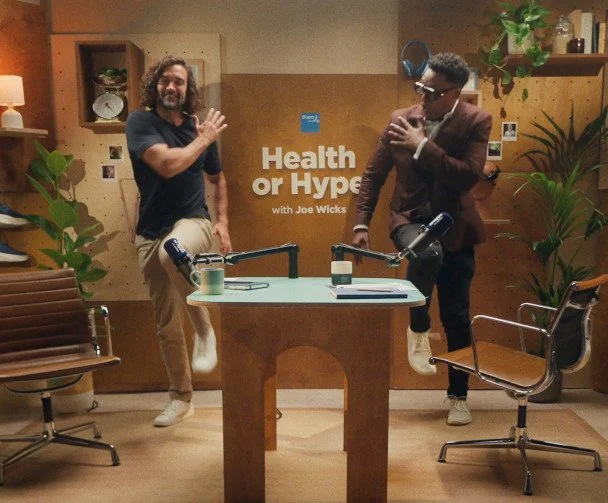
Movement snacks are short opportunities to add movement and break up sedentary time during the day.
How does movement affect mental health?
Our conversation also explores movement and mood.
Physical activity can influence psychological health as well as physical health.
A large 2023 umbrella review examined 97 systematic reviews involving more than 128,000 participants. Physical activity interventions were associated with reductions in symptoms of depression, anxiety and psychological distress across a wide range of adult populations.[6]
That does not mean every movement session produces the same psychological response.
The effects vary between people and according to the type of activity, dose, context, health status and other factors.
The broader evidence supports physical activity as an important component of mental health promotion and care.[3,6]
This connection between movement, brain and behaviour forms part of the cognitive neuroscience pillar of the Primal Play Method®.
The cognitive neuroscience of active play
What is the DOSE framework?
During Health or Hype, I also use the familiar DOSE framework as a simple way to introduce four neurochemical systems associated with movement, motivation, mood and social connection:
Dopamine relates to processes including motivation, reward learning and movement.
Oxytocin has roles in social behaviour, bonding and interpersonal connection.
Serotonin contributes to many functions including mood regulation.
Endorphins are endogenous opioid peptides involved in pain modulation and responses to physical exertion.
DOSE provides an accessible teaching device.
Human neurobiology is considerably more complex than four “feel-good chemicals”, so I use the framework as an entry point rather than a complete explanation of how exercise affects the brain.
Movement creates a wide range of neural, physiological and psychological responses.
The context matters too. Moving with another person can feel different from training alone.
Learning a skill can create a different experience from repeating a familiar exercise.
Play can introduce novelty, uncertainty, feedback, social interaction and challenge.
These experiences help explain why I see cognitive neuroscience and play psychology as essential parts of movement science.
In this short clip from Health or Hype, I explain why the experience of movement matters and how enjoyment can support a movement practice people want to continue.
Why does enjoying movement matter?
Health advice often focuses on future outcomes.
Exercise today because it may protect your health later. Build strength now because you may need it as you age. Improve your cardiovascular fitness because it reduces future health risk.
These are important reasons to move, but they are delayed rewards.
Play can also create something valuable in the moment.
A challenge.
A laugh.
A new skill.
A moment of connection.
The satisfaction of solving a physical problem.
The experience itself can become part of the reward.
That distinction matters because long-term health benefits depend heavily on repeated behaviour.
Evidence from self-determination theory research links more self-governed motivation to physical activity participation. Intrinsic motivation appears particularly relevant to longer-term adherence.[4,5]
My work asks how we can design movement experiences that give people more reasons to return. In Health or Hype, I describe this shift as moving from a “workout” towards a “playout”, while still creating an appropriate physiological stimulus.
The four scientific pillars behind my approach
The Primal Play Method® is organised around four scientific domains.
Exercise physiology asks what physical stimulus we are creating and what adaptation we want.
Cognitive neuroscience examines how movement interacts with the brain, learning, cognition, emotional regulation and motor control.
Evolutionary biology considers the diversity of movement human beings are capable of and how modern environments can restrict that movement.
Play psychology explores motivation, autonomy, challenge, enjoyment, connection and the experience of participation.
Together, these perspectives allow us to ask a broader question than “What exercise should I do?”
We can also ask:
What movement fits this person?
What capability are we trying to develop?
What experience could make participation more meaningful?
What might make them want to return?
The four scientific pillars of the Primal Play Method
What happens when everyday movement disappears?
Joe's experiment in Health or Hype provides a useful way to think about movement from the opposite direction.
We usually notice exercise because we deliberately add it to our day.
Sedentary behaviour can be less visible.
Sitting at a desk.
Sitting in a car.
Sitting on a train.
Sitting in front of a screen.
Over time, everyday opportunities to walk, carry, climb, change position and physically interact with our environment can disappear.
WHO recommends limiting sedentary behaviour and replacing sedentary time with physical activity whenever possible.[3]
This doesn't mean turning every minute into exercise.
It means recognising that movement can happen throughout the day.
That is one reason movement snacks can be useful. They make movement easier to attain.
My message from Health or Hype
Movement is one of the most powerful behaviours available to us for supporting health across the lifespan.
Exercise science helps us understand the stimulus.
Exercise medicine helps us apply movement to health, prevention, function and disease management.
Behavioural science helps us understand participation.
Play gives us another way to engage with the experience.
I want people to broaden their definition of what movement can look like.
You can train in a gym.
You can run.
You can lift weights.
You can also walk, crawl, climb, carry, dance, balance, throw, practise a skill, play with another person or take five minutes during your working day to move.
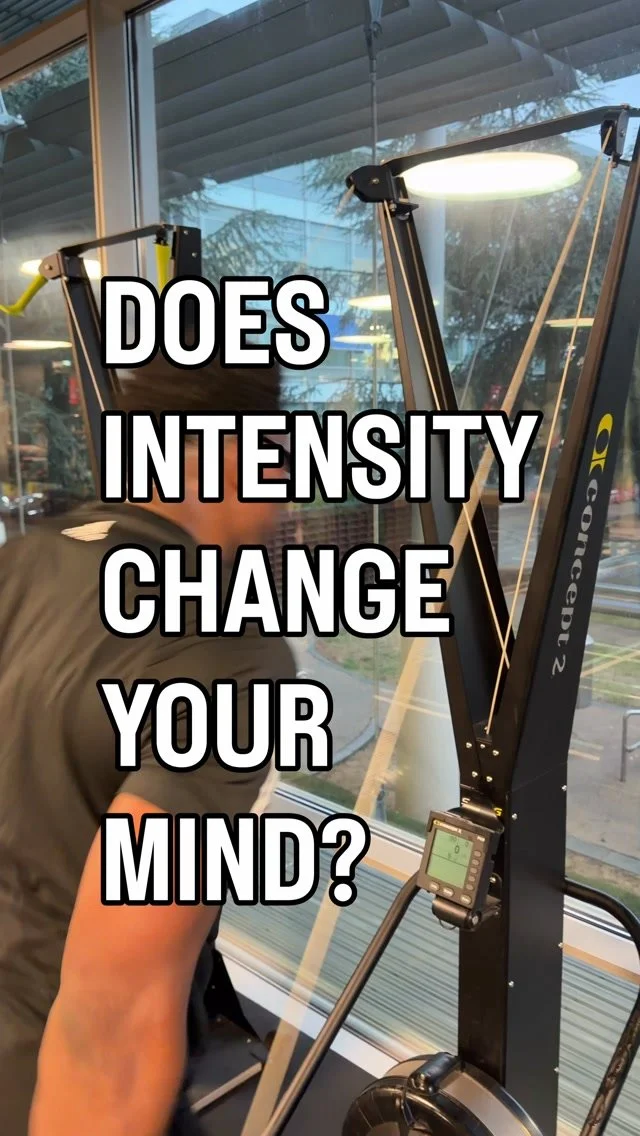
You can pursue intensity when intensity serves the goal.
You can pursue strength when strength serves the goal.
You can slow down, explore and learn.
The aim is a physically active life with enough challenge, variety and appropriate intensity to support your health and physical capability.
And ideally, you find reasons to enjoy some of it along the way.
Watch Health or Hype: Movement
Watch or listen to Episode 1 of Health or Hype with Joe Wicks and Bupa to see what happens when Joe dramatically reduces his movement and what we can learn about bringing more physical activity back into everyday life.
Want to rethink your own relationship with movement?
Explore the Primal Play Method® and discover an evidence-informed approach to movement built around exercise physiology, cognitive neuroscience, evolutionary biology and play psychology.
About Darryl Edwards
Darryl Edwards is the founder of the Primal Play Method®, an author, speaker and movement professional whose work explores active play, physical activity, exercise medicine and sustainable movement across the lifespan.
His approach combines exercise physiology, cognitive neuroscience, evolutionary biology and play psychology to translate movement science into practical ways for people to become more active.
Learn more about Darryl Edwards
Related reading
What Is the Primal Play Method?
The Four Scientific Pillars of the Primal Play Method
Cognitive Neuroscience and Active Play
References
Bupa Group. Health or Hype podcast episode 1: Movement. Published 2026. Accessed September 25, 2026.
Wicks J. Introducing Health or Hype, my brand-new podcast with Bupa. The Body Coach. Published September 22, 2026. Accessed September 25, 2026.
World Health Organization. WHO Guidelines on Physical Activity and Sedentary Behaviour. World Health Organization; 2020. ISBN: 9789240015128.
Teixeira PJ, Carraça EV, Markland D, Silva MN, Ryan RM. Exercise, physical activity, and self-determination theory: a systematic review. Int J Behav Nutr Phys Act. 2012;9:78. doi:10.1186/1479-5868-9-78. PMID: 22726453.
Xu Z, Shamsulariffin S, Azhar Y, Xi M. Does self-determination theory associate with physical activity? A systematic review of systematic review. Int J Psychol. 2025;60(3). doi:10.1002/ijop.70044. PMID: 40256835.
Singh B, Olds T, Curtis R, et al. Effectiveness of physical activity interventions for improving depression, anxiety and distress: an overview of systematic reviews. Br J Sports Med. 2023;57(18):1203-1209. doi:10.1136/bjsports-2022-106195. PMID: 36796860.