

10 Evidence-Based Benefits of Play for CHILDREN, Adults and Healthy Ageing
Why playful movement matters for your brain, body, relationships and long-term health
““We do not stop playing because we grow old, we grow old because we stop playing.””
Originally published: 9 April 2019
Last updated: 25 March 2026
Play is often treated as something that belongs to childhood. The evidence supports a broader view. Play helps children develop physically, emotionally, socially and cognitively. It also supports adult health, adherence to movement, social connection, and healthy ageing.
That matters because, across the lifespan, people need movement that is engaging enough to keep doing it. Playful movement helps make that possible.
For many adults, play has been pushed aside by schedules, screens, stress and the belief that movement only counts when it looks like formal exercise. That mindset makes activity feel like a task. Play changes the experience. It brings back curiosity, enjoyment, challenge and choice, which are powerful drivers of long-term adherence.
This article explains what play is and 10 evidence-based reasons to make more room for it in daily life.
What Is Play?
Play is activity chosen for its own sake. It is usually shaped by enjoyment, curiosity, experimentation, imagination, challenge or social connection. It can be physical, creative, social, competitive, exploratory or quiet.
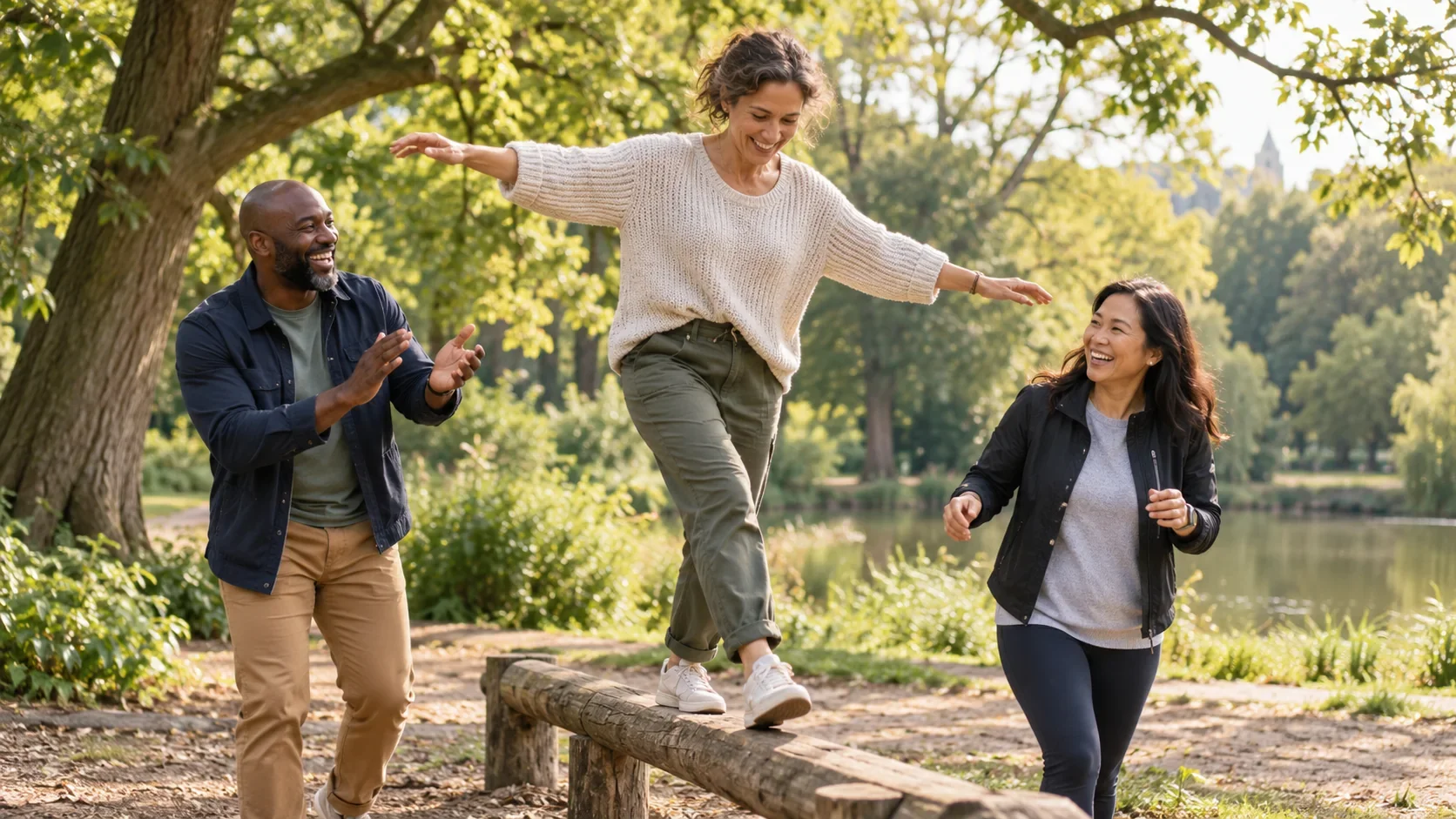
For adults, play does not need to mean toys or children’s games. It can include dancing, climbing, balancing, chasing, throwing, rough-and-tumble movement, racket sports, movement games, martial arts drills, outdoor exploration or playful strength work.
Play can be light-hearted, but it is not trivial. It helps people practise adaptation, coordination, problem-solving, emotional regulation and social skills in a way that feels engaging rather than forced.
Here are 10 strong reasons to make more time for play, whether your goal is better health, better movement, better relationships or a more enjoyable way to stay active.

The Top 10 Benefits of Play
#1: PLAY HELPS YOU MOVE MORE
Play often increases movement without the resistance people feel towards formal exercise. Games, playful challenges, and active hobbies can increase daily physical activity, reduce sedentary time, and make movement feel easier to sustain. WHO guidance recommends at least 150 to 300 minutes of moderate aerobic activity per week for adults, along with reducing sedentary time and engaging in regular muscle-strengthening activity. All movement counts.
Rough and tumble play with the kids, or playing tag could lead to improved physical benefits.
Active play provides a straightforward alternative that doesn’t need the gym.For children, active play helps build motor skills, coordination, balance and confidence with movement from an early age.
#2: ACTIVE PLAY SUPPORTS BRAIN HEALTH
Playful movement engages both the brain and the body. It often involves attention, timing, adaptation, novelty, decision-making and sensory feedback. That makes it cognitively rich. Playful activity can support cognitive engagement, attention, coordination, decision making and learning.
In children, play also supports learning, attention, self-regulation and healthy cognitive development. In adults and older adults, playful activity may support cognitive engagement and healthy ageing.
#3: PLAY CAN IMPROVE PROBLEM-SOLVING AND ADAPTABILITY
Having trouble coming up with the answer to a difficult problem? One possible solution is to get outside and play. According to a study (“The Effect of Play on Convergent and Divergent Problem Solving”) from Canadian researchers at the University of Toronto and the University of Waterloo, play leads to the development of “divergent thinking". Divergent thinking is the ability to generate many independent solutions to the same problem.
Play creates space for experimentation. It encourages you to test options, improvise, make mistakes and try again. That makes it useful for flexible thinking and adaptive problem-solving in children and adults.
For older adults, playful movement can help maintain confidence, coordination and everyday function.
#4: PLAY CAN SUPPORT CREATIVITY
Researchers have shown a direct correlation between periods of extended play and improved creativity. A major reason for this is that play is usually unstructured, with no true beginning or ending. This is observable in children, where periods of free play often lead to new types of games with rules made up as they go.
Adults, too, can leverage this creativity benefit of play if they are looking for ways to “think outside the box.” It’s why tech start-ups often have game rooms that encourage play during breaks. Play can lead to more effective work.
Creativity grows when people have room to explore without being tightly controlled by outcomes. Play gives that room. It supports curiosity, novelty and different ways of thinking, which is one reason it matters beyond childhood.
#5: PLAY IMPROVES ENJOYMENT AND CONSISTENCY
On the surface, play and productivity would appear to be at opposite ends of the spectrum. However, play in a corporate work environment can enhance productivity.
Enjoyment is one of the clearest drivers of long-term movement adherence. Many adults know what they should do for health, but struggle to sustain routines that feel punishing or dull. Play improves the experience, which makes consistency more realistic.
#6: PLAY STRENGTHENS SOCIAL CONNECTION
The first research into the link between play and better relationships focused on children, and especially preschool children. What researchers found is that children who routinely socialised with others of the same age-adjusted better to social situations. Play gave these children better social and emotional skills, as well as a sense of belonging.
Adults, too, can use playfulness as a relationship-building tool. In a romantic relationship, playfulness can actually encourage greater intimacy between two partners. It can also rekindle a long-time relationship that might have lost its spark.
Many forms of play are shared. They create eye contact, laughter, trust, cooperation and moments of mutual challenge. For children, shared play supports turn-taking, cooperation, belonging and social development.

Outdoor play can support movement, mood and social connection.
#7: PLAY SUPPORTS EMOTIONAL REGULATION AND CONFIDENCE
Play helps build confidence and the ability to work well in groups. No wonder so many corporations now engage in elaborate team-building activities that involve play-based activities.
In children, the benefits are also noticeable. Researchers have found that children who participate in play are better able to navigate social situations without awkwardness and with improved self-confidence. Play helps build confidence, emotional regulation and the ability to handle challenge.
Play gives people a safe space to test effort, risk, uncertainty and social interaction. That can build confidence, self-expression and emotional flexibility. It is also useful for adults who feel self-conscious about exercise, because it shifts the focus from performance to participation.
#8: PLAY CAN REDUCE STRESS AND IMPROVE COPING
In adults, play can be a useful way to reduce stress and anxiety. Recent research on adult playfulness suggests that playfulness is associated with better coping and lower perceived stress in some settings. Put another way, playing in a spontaneous, rules-free way is a great way to blow off steam and chill out.
One of the most effective forms of play for stress reduction is outdoor play, but even short indoor video games can help after a rough day at the office.
#9: PLAY CAN IMPROVE WELLBEING ACROSS ADULTHOOD
Recent evidence suggests that playfulness is associated with higher well-being and fewer depressive symptoms, including in middle and older age. Play is not a cure-all, but it is a useful part of a healthier life. A study titled “The Playful Advantage” found that engaging in play can enhance coping strategies and lead to a more positive outlook on life. The researchers examined the behaviours of about 900 university students. The students described as playful were better able to cope with stress and were more positive about life.
#10: PLAY BUILDS COOPERATION AND REAL-WORLD FUNCTION
Play often requires turn-taking, sharing space, adjusting behaviour, and resolving minor conflicts in real time. Physical play also develops balance, coordination, reaction time, force control, and awareness. These qualities matter for healthy ageing, confidence and everyday function.
Unstructured play can improve the capacity for cooperation. In children, unstructured play builds confidence, emotional regulation and the ability to handle change.
RELATED: Have more fun with fitness!
Play is one of the most overlooked ways to support physical activity, brain engagement, social connection and long-term wellbeing. It makes movement more enjoyable, more human and more sustainable.
You do not need to train like an athlete or join a gym to benefit. You need more moments of curiosity, movement, challenge and enjoyment built into real life. Play is not a distraction from health. For many people, it is the doorway into it.
Play is one way to unlock a full range of physical, mental, social and emotional benefits, both in children and in adults. Sign up to receive evidence-informed ideas on active play, natural movement and health across the lifespan.
RELATED POSTS:

References:Garvey C. Play. Cambridge, MA: Harvard University Press; 1990.
Bull FC, et al. WHO 2020 guidelines on physical activity and sedentary behaviour. Br J Sports Med. 2020.
World Health Organization. WHO Guidelines on Physical Activity and Sedentary Behaviour. 2020.
Tonkin, A., & Whitaker, J. (2021). Play and playfulness for health and wellbeing: A panacea for mitigating the impact of coronavirus (COVID 19). Social sciences & humanities open, 4(1), 100142.
Fleg A, Miller F. Making Room for Play in Lifestyle Medicine. Am J Lifestyle Med. 2025.
Tandler N, et al. Adult playfulness and coping with stress at work. 2024.
Brauer K, et al. Playfulness in middle and older age and wellbeing. 2024.
Holmes R, Hart T. Adult playfulness and emotional intelligence. 2022.
Proyer RT, et al. Adult playfulness and relationship satisfaction. 2019.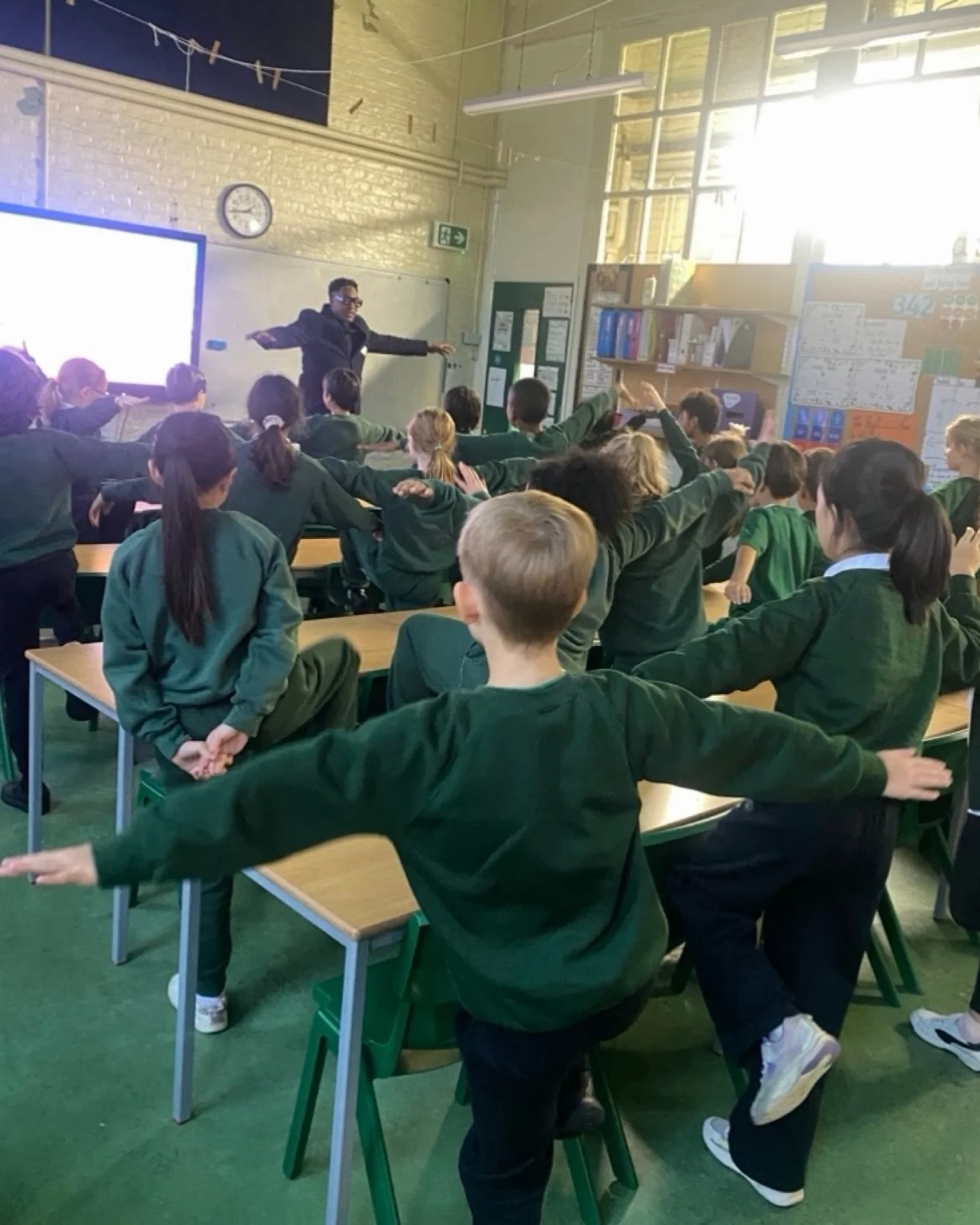

Rediscover the joy of movement by reconnecting with play, curiosity, and your body’s natural instincts. This article explores why traditional exercise often fails, how playful movement supports physical and mental health, and how to build a more enjoyable, sustainable relationship with movement.