
Darryl Edwards
Published: 15 January 2020
Last updated: 20 September 2026
What is a piggy-back carry?
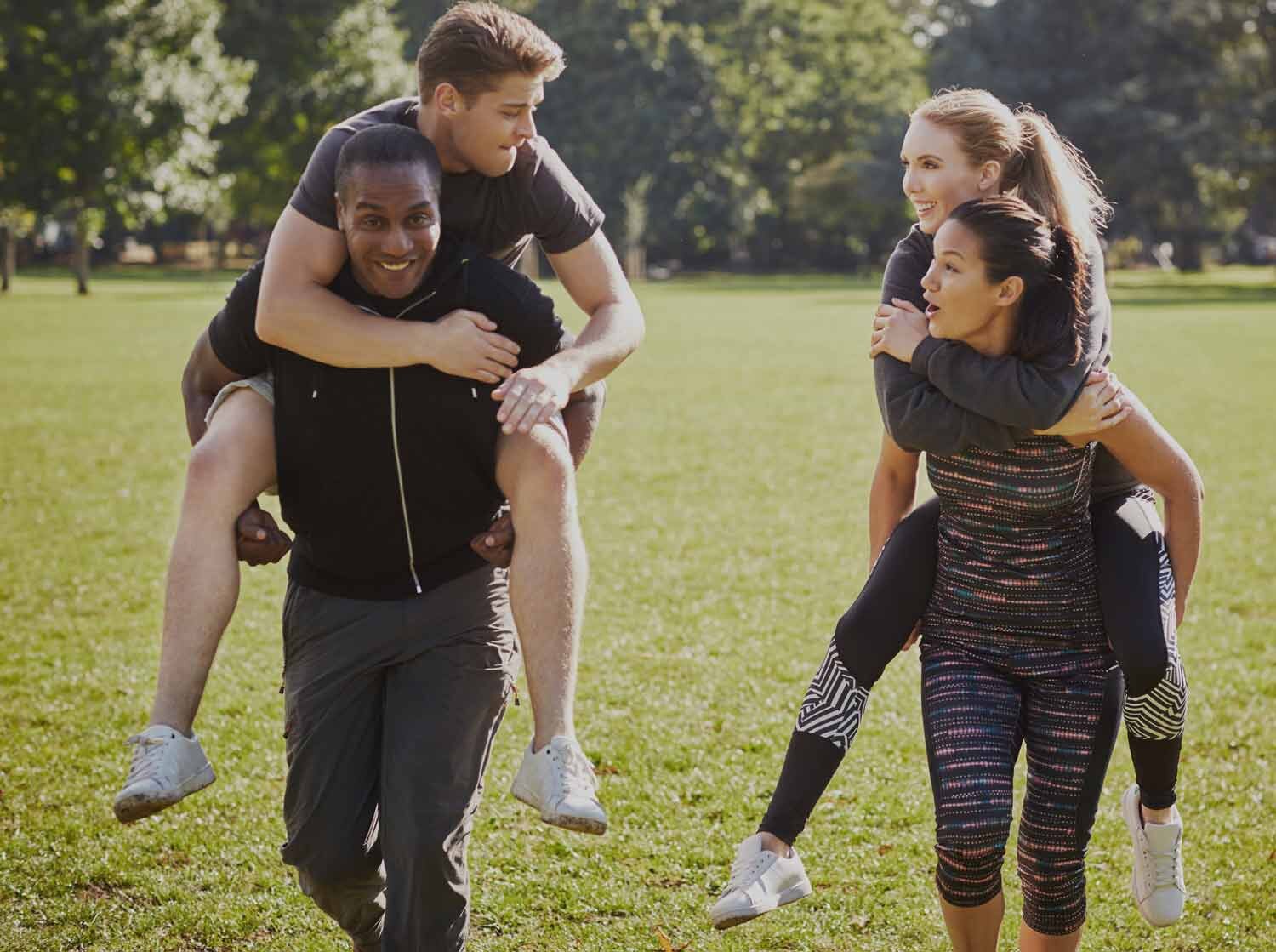
A piggy-back carry is a partner movement in which one person carries another securely on their back for a short distance. It can develop lower-body strength, balance, coordination and communication when both people are well matched and comfortable. Start slowly, use level ground and stop if either person feels unsafe.
Piggy-back carries form part of the Partner and Social Play pathway within the Primal Play Method®.
Lifting weights (resistance training) can be fun, especially if you are carrying another human being!
How to Give a Piggy-Back Carry Safely
Agree on the start, stopping signal and distance before moving.
Choose a clear, level and non-slip surface. Avoid stairs, traffic, obstacles and uneven ground.
The carrier should stand with their feet about hip-width apart. The rider stands directly behind them.
The carrier bends their knees and hips slightly while keeping their chest lifted. The rider places their arms over the carrier’s shoulders without pulling around the neck.
The carrier reaches under the rider’s thighs and holds them securely just above the knees.
The rider keeps their body close to the carrier. Both people confirm that they feel stable before standing.
The carrier pushes through their feet and stands smoothly. Avoid twisting or jerking.
Walk slowly using short, controlled steps. Keep communicating throughout the carry.
To finish, stop completely. The carrier bends their knees and lowers the rider under control until both feet reach the ground.
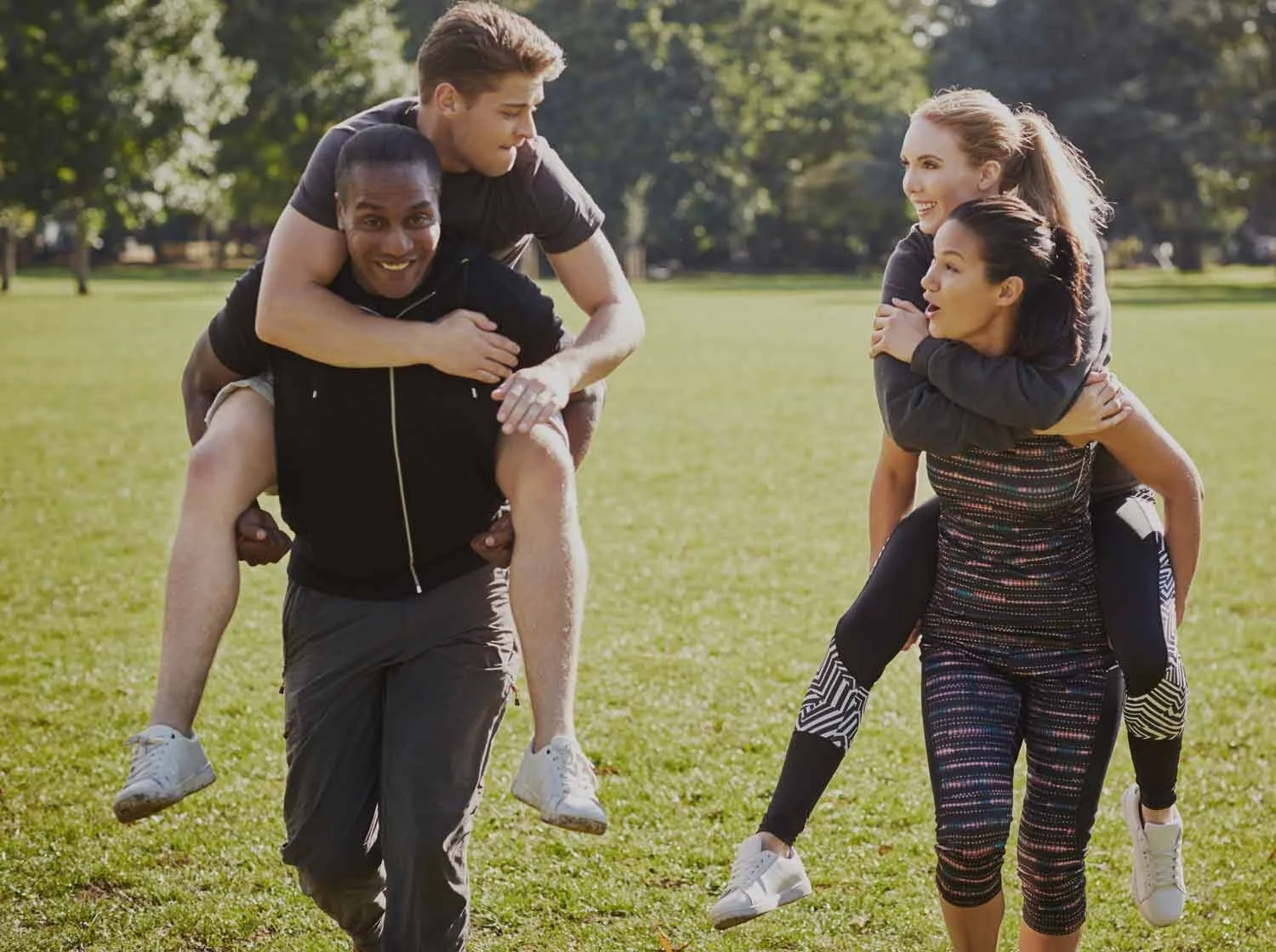
Having fun with Piggy-Back Carries…
Who Is a Piggy-Back Carry Suitable For?
Piggy-back carries can be adapted for children and adults. Consider the carrier’s strength, balance, movement control, maturity and experience alongside the rider’s size. The carrier must be able to control the load from the start through to a safe landing.
Choose each pairing carefully. Begin with a short distance on a clear, level surface and communicate throughout. Children carrying adults require close supervision and an appropriate match between carrier and rider.
Avoid the movement when pain, poor balance, dizziness, recent injury, surgery or a health condition makes loaded carrying unsuitable. Seek individual professional guidance if you are unsure.
Make It Easier
Practise the movement pattern with a well-fitted backpack before carrying another person. Start with a short distance, move slowly and use a partner you can carry comfortably.
Progress Carefully
Progress may involve increasing the distance, changing direction or using a more demanding partner pairing. Add one challenge at a time. The carrier should maintain steady posture, secure support and controlled movement throughout.
Multi-person carries require considerable strength, balance, coordination, trust and communication. Treat them as advanced challenges rather than standard starting points.
Frequently Asked Questions
What is a piggyback ride?
A piggyback ride involves one person carrying another on their back. The carrier supports the rider beneath the thighs while the rider stays close to the carrier’s upper body.
Are piggyback carries exercise?
Yes. The carrier’s legs, hips and trunk work to support and move the combined load. The activity also challenges balance, coordination, grip and communication between partners.
Which muscles do piggyback carries work?
The main muscles involved include the quadriceps, gluteal muscles, hamstrings, calves and trunk muscles. The upper back and arms help secure the rider.
How can you make a piggyback ride safer?
Choose a manageable pairing, agree on a stopping signal and use a clear, level, non-slip surface. The rider should stay close without pulling around the carrier’s neck. Walk slowly, communicate throughout and lower the rider under control. Stop if either person experiences pain, instability or loss of confidence.
Can children carry adults in a piggy-back carry?
Some children can carry an adult when they have sufficient strength, balance, movement control and experience. Choose the pairing carefully, supervise the activity and begin with a short, controlled carry. Stop if either person loses balance, confidence or control.
Can you carry more than one person?
Multi-person piggy-back carries are advanced challenges. They require considerable strength, balance, coordination and cooperation between everyone involved. Build experience through controlled single-rider carries before considering a more complex version.

Strength meets play: Darryl Edwards takes the piggy-back carry to an advanced level with three riders. A challenge requiring strength, balance, coordination, communication and plenty of trust.
RELATED POSTS:


TRAIN ANIMAL MOVE HUMAN

Animal Moves book by Darryl Edwards available now...


Learn how to perform the Bear Crawl, what it trains, and how to make this quadrupedal movement easier, harder or more playful.