

Why Sprinting Is So Good For Your Health
First Published: 21 DECEMBER 2019
Updated: 25 MARCH 2026
7 Benefits of Sprinting for Health, Fat Loss and Longevity
7 Benefits of Sprinting
“The first athletic event ever held in the ancient Olympic Games in Olympia, Greece, was the 200-yard sprint (around 193 metres), which went from one end of the track to the other.
This sprint was based on the distance the hero Hercules could, according to legend, run on a single breath.”
Are Sprints Good For You? Yes.
Sprinting can be one of the most effective ways to improve fitness, body composition, metabolic health and physical function. It is time-efficient, powerful and adaptable. It is considered a staple of the Primal Play Method.
You do not need to be an athlete to benefit. Short bursts of fast effort, whether running, uphill walking, cycling, or playful chase-based movement, can help support heart health, glucose control, muscle function and healthy ageing.
Children sprint naturally during play, adults can use structured intervals, and older adults can use short, fast efforts adapted to their current ability to help maintain power and mobility.
Humans are built for varied movement, including bursts of speed. Modern life gives us very few reasons to move fast, but sprinting helps restore a useful physical capacity that many of us have lost. Sprint interval training is a time-efficient form of high-intensity exercise using short bursts of maximal effort. These sprinting workout benefits make short bursts of fast movement a powerful and time-efficient option.
A quick note before you start: sprinting should match your current ability. If you are deconditioned, returning after injury, have joint pain, or have a medical condition, begin with brisk uphill walking, short hill efforts, cycling intervals, or fast marching before progressing to full-speed running.
My TED talk on “Why Working Out Isn’t Working Out” discusses some of the issues based on a sedentary lifestyle and what we can do about it.
If you can sprint, you most likely should consider doing so.
Here are seven health benefits of adding sprinting to your movement routine and how to do so.
#1 Improves Body Composition and Helps Build Lean Muscle
Your body composition is your ratio of fat-to-muscle. Many individuals have poor body composition, with high body fat and low muscle mass. As a society, we eat too many energy-dense, nutrient-poor foods that promote fat deposition in our bodies. Many of us certainly don't do enough regular movement to build and maintain lean body mass.
Sprinting, however, not only helps burn fat but also encourages muscle growth. The reasons for this are not as straightforward as you might think.
Researchers are aware that it's not just total calorie burn that matters for body composition, but also the types of diet and exercise people follow.
Research in Exercise and Sports Science Review suggests that sprinting shocks the body, prompting cellular-level adaptations that make it fitter. The researchers found that gene expression matters most for improving body composition.
Sprinting sends a signal to cells all over the body to toughen up and adapt to the new physical activity requirements, improving oxidative capacity and metabolic control during subsequent exercise, leaving you leaner.
Do you think endurance athletes have less body fat as a percentage of overall mass than sprinters? Interestingly, there is research comparing the body composition of sprint and endurance athletes, demonstrating that sprinters tend to have lower body fat percentages, even though endurance athletes may look leaner.
Sprinting can also support fat loss because short bursts of intense effort increase energy expenditure and help preserve or build lean muscle.
#2 Sprinting Supports Healthy Ageing, Power and Bone Health
Since it builds muscle, sprinting can help you stave off the muscle-wasting effects of ageing. Humans have several types of muscle fibres in their bodies, including so-called "fast-" and "slow-twitch" fibres. Fast-twitch muscle (type IIa and type IIb fibres that help you move powerfully) fatigue far more quickly than slow-twitch muscle (type I fibres used for posture and endurance).
Sprinting, as you might expect, trains fast-twitch fibres while movement patterns like standing, walking, and jogging activate slower-acting muscle cells.
Sprinting is an excellent exercise for those who want to build speed and power. The more you train the fast-twitch muscle fibres in your legs, the faster you'll be able to run and the higher you'll jump.
The skeleton also gets stronger too. Sprinting is classified as a weight-bearing exercise, and thus the bones can get stronger from sprinting. Getting your sprints in can help ward off osteoporosis and protect your balance and coordination.
You may feel you are too old to sprint and that it is an activity just for the young? Well, if in any doubt be inspired by Irene Obera still sprinting and breaking records well into her 80s. Sprinting helps maintain power, cardiovascular fitness and metabolic health, which are associated with healthy ageing and longevity.
It isn’t just about the body, though. Sprinting helps with ‘quickness’ and reaction time: evidence suggests improvements in reaction time reduce the risks of cognitive decline and conditions such as Alzheimer’s and dementia as we age. Explosive movement helps maintain power. Power tends to decline earlier than strength and matters for healthy ageing, function, and confidence. Sprinting is one of the simplest ways to maintain explosive movement capacity. Short bursts of high-intensity movement may also support brain health through coordination, reaction time and neuromuscular engagement.
#3 Improves Cardiovascular Fitness and VO2 Max
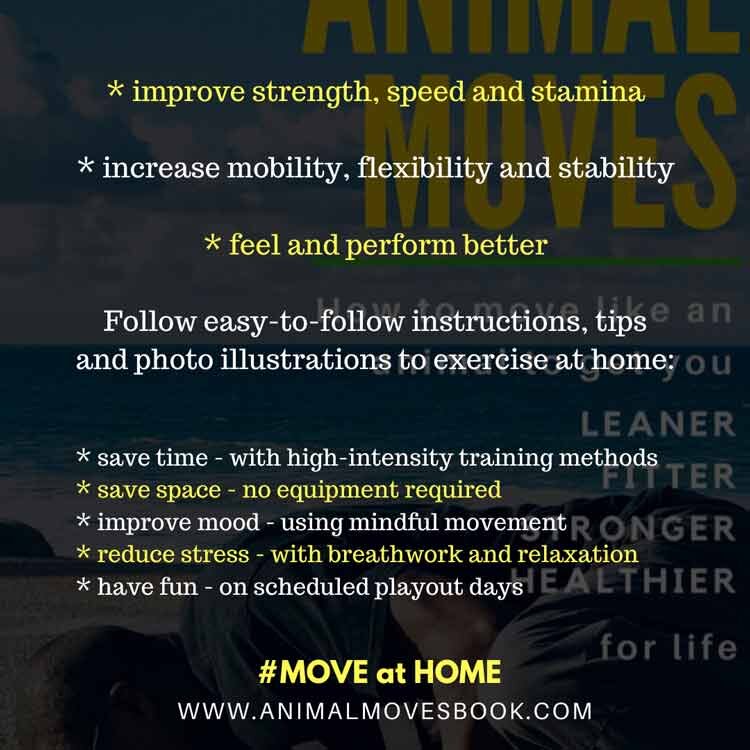
HIIT or "high-intensity interval training" is something of a buzzword in the fitness industry right now. Practically every blog or fitness site recommends this type of workout, and for a good reason, it's time-efficient and highly effective. HIIT is something I utilise as part of the programme in my Animal Moves book too!
Sprinting is the quintessential HIIT training tool. It's high-intensity, and you can do it in intervals: sprint for a short period, then rest between sprints.
Research in the Journal of Sports Science and Medicine suggests that HIIT training offers many advantages for cardiovascular fitness over traditional "steady state" training (such as jogging for 5 miles). Researchers found that, compared to controls, students who engaged in HIIT training saw significant improvements in their VO2 max (a measure of oxygen use) and peak power output, two important markers for cardiovascular fitness.
Unfortunately, HIIT training was much less enjoyable for most people enrolled in the study than the less intense exercise. It is much harder work for sure, but turning this activity into a game, such as a game of chase or a version of tag, would undoubtedly enhance the enjoyment factor.
Sprinting even has its own HIIT category called SIT (sprint interval training), which has similar health and performance benefits, including attaining a lower resting heart rate.
It's no secret that sprinting, like other forms of exercise, is great for your heart. Regular sprints lower your risk of heart disease, improve your blood cholesterol levels, and help control and prevent high blood pressure. Short sprint intervals can improve cardiovascular fitness and VO2 max in far less time than longer steady-state sessions.
RELATED: The Benefits of Playing Tag#4 Sprinting Helps Reduce Stress and Boost Mood
Like other forms of exercise, sprint training can combat stress. It releases feel-good endorphins into the brain, helping sprinters cope with the rigours of training and come out on the other side feeling good, ready to do it all over again.
Sprinting calms your body and your brain. In the short term the physical stress of the sprint helps you to focus on the task at hand. After your body works hard through sprinting, the levels of stress hormones, like adrenaline and cortisol, drop. Stress and anxiety fade away.
Endorphins tend to be highest at the end of an exercise session, giving the sprinter a sensation of confidence and relief. The sprinter’s high.
High-intensity effort can also sharpen focus and improve mood, especially when sprinting is done in a playful or outdoor setting.

#5 Boosts Metabolism After Sprinting
Sprinting burns more calories per unit of time than jogging, but the average person can only sustain a sprint for 30 seconds at most. After that, the body depletes its anaerobic stores and must rely on aerobic sources of energy, which can't sustain the same high levels of effort.
In the past, the thinking was that sprinting couldn't burn as many calories as long-duration physical activity. But, researchers have found that sprinting increases the rate of energy burn long after a person finishes exercising. Sprinting isn't just about the calories your body burns during exercise, but also those that it uses to recover afterwards. One measure for this phenomenon is EPOC (excess post-exercise oxygen consumption) otherwise known as the after-burn effect or oxygen debt.
Heavy resistance training and HIIT workouts appear to be superior to steady-state running or lower-intensity training in creating EPOC. Sprint interval training is a time-efficient way to improve cardiovascular fitness and the broader workout benefits of high-intensity exercise.
From an evolutionary point of view, it wasn't an advantage to dedicate vast energy resources to building muscle: it was much better to keep muscles as small as possible to lower energy requirements. The process of modifying muscle fibres into fast-twitch is energy-intensive, meaning that the body resists building them if it thinks it can get away with it. Sprinting overcomes this natural reluctance, however, and forces the body to make these energy-consuming adaptations after you finish exercising, dramatically increasing your overall burn.
Sprinting creates a strong metabolic response and may increase post-exercise oxygen consumption after the session ends.
RELATED: Top 10 Benefits of Animal Moves
#6 Sprinting Improves Glucose Control and Insulin Sensitivity
Many individuals have poor glucose control (and don't know it). Our cells have become less sensitive to insulin, which acts like a key that unlocks the cell's door, allowing glucose to enter. Reduced insulin sensitivity or, more seriously, the development of insulin resistance (which can develop into type 2 diabetes), means insulin can't shuttle sugar into cells, leading to a dangerous accumulation of glucose in the blood.
Researchers published in BMC Endocrine Disorders found that sprinting could improve metabolic risk factors, such as high blood sugar levels, as well as improve cholesterol levels, reduce blood pressure, cut abdominal fat, and improve sugar metabolism.
Researchers believe sprinting might improve glucose control through pathways similar to those that improve cardiovascular health. A burst of intense exercise, such as sprinting, signals to cells that they need to get their act together, making it more likely you'll survive in a demanding environment.
Repeated sprint efforts can improve insulin sensitivity and help the body manage glucose more effectively. Sprinting tells your cells that life is fierce, and you need them to do better!
#7 Sprinting Can Be Adapted Almost Anywhere
The great thing about sprinting is that it can be done anywhere. You can sprint on grass, on hills, on a bike, or use short fast efforts such as brisk uphill walking if full sprinting is not suitable yet. You don't need a gym membership; you can sprint at home. Even with limited space, you can sprint on the spot or, seated in your chair, use your arms.
It's even better when you get outside to exercise; you can sprint in your back garden or down the street. Head to your local park and sprint there too. You can watch a video of me sprinting outside here!
If you are in the gym and want to replicate the intensity of the sprint on a treadmill, try Treadmill Drivers - otherwise known as the Deadmill. Very playful and very powerful!
My personal favourite is sprinting for the bus! What about you?
How to Start Sprinting Safely
Start with short efforts of 5 to 10 seconds. Use hills to reduce impact and control speed. Rest fully between efforts. Focus on quality, posture, and rhythm rather than fatigue. One or two sessions per week are enough for most beginners.
To help you improve your sprint technique and for an example sprint programme check out this post.
Playful Ways to Sprint
Sprinting does not always need to look like a track workout. Tag, chase games, races, hill sprints, and short bursts during play can deliver many of the same benefits while making movement more enjoyable and more sustainable. These sprinting workout benefits make it a powerful addition to a well-rounded movement routine.
Start Small
Sprinting is one of the simplest ways to build power, fitness and movement confidence in less time. Start small, keep the quality high, and make it playful.
Want a practical place to begin? Read my sprint technique guide and example sprint programme. Explore the benefits of balance training, or discover the Primal Play Method for more natural and enjoyable ways to move.
Frequently Asked Questions
Is sprinting good for fat loss?
Sprinting can support fat loss by increasing energy expenditure, improving metabolic health, and helping preserve lean muscle.
Is sprinting better than jogging?
They do different jobs. Jogging can build aerobic volume, while sprinting is better for speed, power, time-efficiency, and certain metabolic adaptations.
Is sprinting safe for older adults?
It can be, when adapted to ability. Fast walking, hill efforts, cycling intervals, or short accelerations may be better starting points than maximal running. You can also combine sprinting with balance and coordination training.
How many sprints should beginners do?
Begin with four to six short efforts of 5 to 10 seconds with full recovery. Progress gradually.
What if I cannot sprint yet?
Use sprint-like efforts, such as uphill walking, cycling intervals, or short, fast bursts, during games and movement drills.
What is Sprint Interval Training?
Sprint interval training is a simple form of high-intensity interval training using very short bursts of maximal effort.
Sprinting with Animal Moves
“Sprinting tells your cells that life is fierce, and you need them to do better!”
RELATED POSTS:


References:
Kravitz L. “Research Sheds New Light on the Exercise ‘Afterburn.’” IDEA Fitness Journal.2015;12(4):16-18.
Gibala MJ, McGee SL. “Metabolic Adaptations to Short-Term High-Intensity Interval Training: A Little Pain for a Lot of Gain?” Exerc Sport Sci Rev.2008 Apr;36(2):58-63. doi: 10.1097/JES.0b013e318168ec1f
Foster C, Farland CV, Guidotti F, Harbin M, Roberts B, et al. “The Effects of High Intensity Interval Training vs Steady State Training on Aerobic and Anaerobic Capacity”. J Sports Sci Med.2015 Nov 24;14(4):747-55.
Babraj JA, Vollaard NBJ, Keast C, Guppy FM, Cottrell G, Timmons JA. “Extremely Short Duration High Intensity Interval Training Substantially Improves Insulin Action in Young Healthy Males.” BMC Endocrine Disorders. 2009 Jan;9:3.
Ancient Greek Olympics - the first Olympic Games in Greece [Internet]. International Olympic Committee. 2019 [cited 2019 Dec 2]. Available from: https://www.olympic.org/ancient-olympic-games/running
Vucetic, Vlatko & Matkovic, Branka & Sentija, Davor. (2008). Morphological differences of elite Croatian track-and-field athletes. Collegium antropologicum. 32. 863-8.
LaForgia, J., Withers, R. and Gore, C. (2006). Effects of exercise intensity and duration on the excess post-exercise oxygen consumption. Journal of Sport Sciences, 24, 12, 1247-1264.

Learn how to perform the Bear Crawl, what it trains, and how to make this quadrupedal movement easier, harder or more playful.